CBN reports:

"A Harvard Law journal says one of the most important parts of the U.S. Constitution, the Fourteenth Amendment, protects the rights of unborn babies.
Adopted in 1868, in the wake of the Civil War, that amendment sought to protect the rights of newly freed slaves.
It declares that no state shall "deprive any person of life, liberty, or property, without due process of law; nor deny to any person within its jurisdiction the equal protection of the laws."
According to an article in The Harvard Journal of Law and Public Policy, law student Joshua Craddock argues that a person becomes a human being at the point of conception, and from that moment forward is entitled to protection under the law.
The journal is a conservative and libertarian review and one of more than a dozen publications edited by Harvard Law students.
Craddock writes, "The preborn are members of the human species from the moment of fertilization. Therefore, the Fourteenth Amendment protects the preborn. If one concedes the minor premise (that preborn humans are members of the human species), all that must be demonstrated is that the term 'person,' in its original public meaning at the time of the Fourteenth Amendment's adoption, applied to all members of the human species."
Based upon the premise that the lives of the unborn are constitutionally protected, Craddock further argues that states that allow abortion are breaking the law.
"Congress or the courts must intervene," he writes, explaining that abortion must not be condoned by the courts.
He argues that legal abortion deprives a particular category of people, in this case the unborn, the equal protection of the law. In other words, it's unlawful not to prosecute people who murder the unborn while at the same time prosecuting those who murder other types of people.
Craddock asserts that the intent of the Fourteenth Amendment was to include the protection of the unborn. "A general consensus treated preborn human beings as 'persons,'" he says. "The preborn were included within the public meaning of the term 'person' at the time the Fourteenth Amendment was adopted."
Furthermore, at that time, most states outlawed abortion in laws covering "offenses against the person" according to The Stream. Most states referred to an unborn child as a "child" in their laws.
Finally, Craddock points out that in 1859, the American Medical Association demanded the government protect the "independent and actual existence of the child before birth." Eight years later, the Medical Society of New York called abortion at any stage of the child's life "murder."
As Dr. & Mrs. J.C. Willke explain in their book "Why can't we love them both: questions and answers about abortion," "Biologic human life is defined by examining the scientific facts of human development. This is a field where there is no controversy, no disagreement. There is only one set of facts, only one embryology book is studied in medical school. The more scientific knowledge of fetal development that has been learned, the more science has confirmed that the beginning of any one human individual's life, biologically speaking, begins at the completion of the union of his father's sperm and his mother's ovum, a process called "conception," "fertilization," or "fecundation." This is so because this being, from fertilization, is alive, human, sexed, complete and growing."
In his Encyclical Letter Evangelium Vitae, Pope John Paul II said that: "Some people try to justify abortion by claiming that the result of conception, at least up to a certain number of days, cannot yet be considered a personal human life. But in fact, "from the time that the ovum is fertilized, a life is begun which is neither that of the father nor the mother; it is rather the life of a new human being with his own growth. It would never be made human if it were not human already. This has always been clear, and ... modern genetic science offers clear confirmation. It has demonstrated that from the first instant there is established the programme of what this living being will be: a person, this individual person with his characteristic aspects already well determined. Right from fertilization the adventure of a human life begins, and each of its capacities requires time-a rather lengthy time-to find its place and to be in a position to act". Even if the presence of a spiritual soul cannot be ascertained by empirical data, the results themselves of scientific research on the human embryo provide "a valuable indication for discerning by the use of reason a personal presence at the moment of the first appearance of a human life: how could a human individual not be a human person?" (No. 60).
Don't expect the liberal mainstream media, which has succumbed to a radical anti-life Culture of Death, to cover this story. They prefer the lie to the truth.
But examine these photos of murdered babies and turn away from the liberal media.
I recommend One America News. See here.
Showing posts with label Conception. Show all posts
Showing posts with label Conception. Show all posts
Thursday, June 22, 2017


Saturday, July 16, 2016
The American Medical Association wants to kill terminally ill patients
Life News reports that the American Medical Association wants to empower doctors to refuse medical care to terminally ill patients.
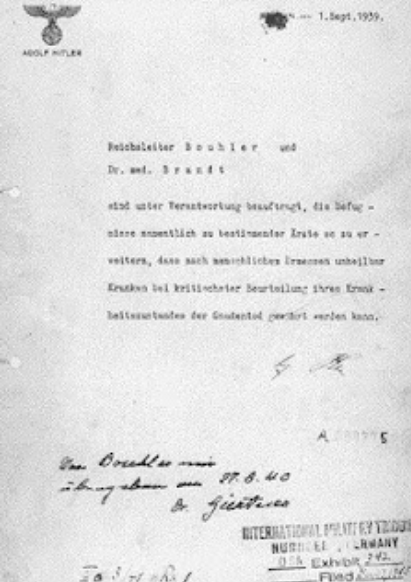
The National Socialist's "Euthanasia" program would set the stage for the Holocaust: the mass murder of Jews and others who were deemed either racially inferior or ideologically unsuitable. In the words of Dr. Leo Alexander, Chief U.S. Medical Consultant at the Nuremberg War Crimes Trials: 'Whatever proportions these crimes finally assumed, it became evident to all who investigated them that they had started from small beginnings."
Dr. Alexander referred to "a subtle shift in emphasis in the basic attitude of physicians." These physicians came to accept the notion that there is such a thing as a life not worthy to be lived. We are witnessing what appears to be a similar "subtle shift in emphasis" with regard to human life in the United States and other Western nations.
In its Declaration on Euthanasia issued on May 5, 1980, the Sacred Congregation for the Doctrine of the Faith had this to say:
"Human life is the basis of all goods, and is the necessary source and condition of every human activity and of all society. Most people regard life as something sacred and hold that no one may dispose of it at will, but believers see in life something greater, namely, a gift of God's love, which they are called upon to preserve and make fruitful. And it is this latter consideration that gives rise to the following consequences:
1. No one can make an attempt on the life of an innocent person without opposing God's love for that person, without violating a fundamental right, and therefore without committing a crime of the utmost gravity.
2. Everyone has the duty to lead his or her life in accordance with God's plan. That life is entrusted to the individual as a good that must bear fruit already here on earth, but that finds its full perfection only in eternal life.
3. Intentionally causing one's own death, or suicide, is therefore equally as wrong as murder; such an action on the part of a person is to be considered as a rejection of God's sovereignty and loving plan. Furthermore, suicide is also often a refusal of love for self, the denial of a natural instinct to live, a flight from the duties of justice and charity owed to one's neighbor, to various communities or to the whole of society - although, as is generally recognized, at times there are psychological factors present that can diminish responsibility or even completely remove it. However, one must clearly distinguish suicide from that sacrifice of one's life whereby for a higher cause, such as God's glory, the salvation of souls or the service of one's brethren, a person offers his or her own life or puts it in danger (cf. Jn. 15:14).
II.
EUTHANASIA
In order that the question of euthanasia can be properly dealt with, it is first necessary to define the words used. Etymologically speaking, in ancient times Euthanasia meant an easy death without severe suffering. Today one no longer thinks of this original meaning of the word, but rather of some intervention of medicine whereby the suffering of sickness or of the final agony are reduced, sometimes also with the danger of suppressing life prematurely. Ultimately, the word Euthanasia is used in a more particular sense to mean 'mercy killing,' for the purpose of putting an end to extreme suffering, or having abnormal babies, the mentally ill or the incurably sick from the prolongation, perhaps for many years of a miserable life, which could impose too heavy a burden on their families or on society.
It is, therefore, necessary to state clearly in what sense the word is used in the present document. By euthanasia is understood an action or an omission which of itself or by intention causes death, in order that all suffering may in this way be eliminated. Euthanasia's terms of reference, therefore, are to be found in the intention of the will and in the methods used. It is necessary to state firmly once more that nothing and no one can in any way permit the killing of an innocent human being, whether a fetus or an embryo, an infant or an adult, an old person, or one suffering from an incurable disease, or a person who is dying. Furthermore, no one is permitted to ask for this act of killing, either for himself or herself or for another person entrusted to his or her care, nor can he or she consent to it, either explicitly or implicitly. nor can any authority legitimately recommend or permit such an action. For it is a question of the violation of the divine law, an offense against the dignity of the human person, a crime against life, and an attack on humanity.
It may happen that, by reason of prolonged and barely tolerable pain, for deeply personal or other reasons, people may be led to believe that they can legitimately ask for death or obtain it for others. Although in these cases the guilt of the individual may be reduced or completely absent, nevertheless the error of judgment into which the conscience falls, perhaps in good faith, does not change the nature of this act of killing, which will always be in itself something to be rejected. The pleas of gravely ill people who sometimes ask for death are not to be understood as implying a true desire for euthanasia; in fact, it is almost always a case of an anguished plea for help and love. What a sick person needs, besides medical care, is love, the human and supernatural warmth with which the sick person can and ought to be surrounded by all those close to him or her, parents and children, doctors and nurses."
A sick person needs love, human and supernatural warmth. They do not need to be treated as a burden and discarded as useless. At a time when the value of human life is being thrown into question by the medical community itself, it is all the more necessary for Christians to stand up for and witness to the dignity of human life from the moment of conception to the final stages of a natural death.
Let us pray:
"O Mary, bright dawn of the new world,
Mother of the living, to you do we entrust the cause of life
Look down, O Mother, upon the vast numbers of babies not allowed to be born, of the poor whose lives are made difficult, of men and women who are victims of brutal violence, of the elderly and the sick killed by indifference or out of misguided mercy.
Grant that all who believe in your Son may proclaim the Gospel of life with honesty and love to the people of our time.
Obtain for them the grace to accept that Gospel as a gift ever new, the joy of celebrating it with gratitude throughout their lives and the courage to bear witness to it resolutely, in order to build, together with all people of good will, the civilization of truth and love, to the praise and glory of God, the Creator and lover of life." (Pope John Paul II, Evangelium Vitae).
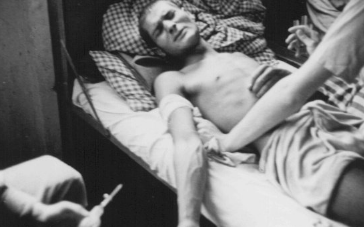

The National Socialist's "Euthanasia" program would set the stage for the Holocaust: the mass murder of Jews and others who were deemed either racially inferior or ideologically unsuitable. In the words of Dr. Leo Alexander, Chief U.S. Medical Consultant at the Nuremberg War Crimes Trials: 'Whatever proportions these crimes finally assumed, it became evident to all who investigated them that they had started from small beginnings."
Dr. Alexander referred to "a subtle shift in emphasis in the basic attitude of physicians." These physicians came to accept the notion that there is such a thing as a life not worthy to be lived. We are witnessing what appears to be a similar "subtle shift in emphasis" with regard to human life in the United States and other Western nations.
In its Declaration on Euthanasia issued on May 5, 1980, the Sacred Congregation for the Doctrine of the Faith had this to say:
"Human life is the basis of all goods, and is the necessary source and condition of every human activity and of all society. Most people regard life as something sacred and hold that no one may dispose of it at will, but believers see in life something greater, namely, a gift of God's love, which they are called upon to preserve and make fruitful. And it is this latter consideration that gives rise to the following consequences:
1. No one can make an attempt on the life of an innocent person without opposing God's love for that person, without violating a fundamental right, and therefore without committing a crime of the utmost gravity.
2. Everyone has the duty to lead his or her life in accordance with God's plan. That life is entrusted to the individual as a good that must bear fruit already here on earth, but that finds its full perfection only in eternal life.
3. Intentionally causing one's own death, or suicide, is therefore equally as wrong as murder; such an action on the part of a person is to be considered as a rejection of God's sovereignty and loving plan. Furthermore, suicide is also often a refusal of love for self, the denial of a natural instinct to live, a flight from the duties of justice and charity owed to one's neighbor, to various communities or to the whole of society - although, as is generally recognized, at times there are psychological factors present that can diminish responsibility or even completely remove it. However, one must clearly distinguish suicide from that sacrifice of one's life whereby for a higher cause, such as God's glory, the salvation of souls or the service of one's brethren, a person offers his or her own life or puts it in danger (cf. Jn. 15:14).
II.
EUTHANASIA
In order that the question of euthanasia can be properly dealt with, it is first necessary to define the words used. Etymologically speaking, in ancient times Euthanasia meant an easy death without severe suffering. Today one no longer thinks of this original meaning of the word, but rather of some intervention of medicine whereby the suffering of sickness or of the final agony are reduced, sometimes also with the danger of suppressing life prematurely. Ultimately, the word Euthanasia is used in a more particular sense to mean 'mercy killing,' for the purpose of putting an end to extreme suffering, or having abnormal babies, the mentally ill or the incurably sick from the prolongation, perhaps for many years of a miserable life, which could impose too heavy a burden on their families or on society.
It is, therefore, necessary to state clearly in what sense the word is used in the present document. By euthanasia is understood an action or an omission which of itself or by intention causes death, in order that all suffering may in this way be eliminated. Euthanasia's terms of reference, therefore, are to be found in the intention of the will and in the methods used. It is necessary to state firmly once more that nothing and no one can in any way permit the killing of an innocent human being, whether a fetus or an embryo, an infant or an adult, an old person, or one suffering from an incurable disease, or a person who is dying. Furthermore, no one is permitted to ask for this act of killing, either for himself or herself or for another person entrusted to his or her care, nor can he or she consent to it, either explicitly or implicitly. nor can any authority legitimately recommend or permit such an action. For it is a question of the violation of the divine law, an offense against the dignity of the human person, a crime against life, and an attack on humanity.
It may happen that, by reason of prolonged and barely tolerable pain, for deeply personal or other reasons, people may be led to believe that they can legitimately ask for death or obtain it for others. Although in these cases the guilt of the individual may be reduced or completely absent, nevertheless the error of judgment into which the conscience falls, perhaps in good faith, does not change the nature of this act of killing, which will always be in itself something to be rejected. The pleas of gravely ill people who sometimes ask for death are not to be understood as implying a true desire for euthanasia; in fact, it is almost always a case of an anguished plea for help and love. What a sick person needs, besides medical care, is love, the human and supernatural warmth with which the sick person can and ought to be surrounded by all those close to him or her, parents and children, doctors and nurses."
A sick person needs love, human and supernatural warmth. They do not need to be treated as a burden and discarded as useless. At a time when the value of human life is being thrown into question by the medical community itself, it is all the more necessary for Christians to stand up for and witness to the dignity of human life from the moment of conception to the final stages of a natural death.
Let us pray:
"O Mary, bright dawn of the new world,
Mother of the living, to you do we entrust the cause of life
Look down, O Mother, upon the vast numbers of babies not allowed to be born, of the poor whose lives are made difficult, of men and women who are victims of brutal violence, of the elderly and the sick killed by indifference or out of misguided mercy.
Grant that all who believe in your Son may proclaim the Gospel of life with honesty and love to the people of our time.
Obtain for them the grace to accept that Gospel as a gift ever new, the joy of celebrating it with gratitude throughout their lives and the courage to bear witness to it resolutely, in order to build, together with all people of good will, the civilization of truth and love, to the praise and glory of God, the Creator and lover of life." (Pope John Paul II, Evangelium Vitae).

Subscribe to:
Posts (Atom)