One of my favorite poets, who was also a great prophetic author, is James Dickey. In his book Deliverance, which was made into a film starring Burt Reynolds and Jon Voight, he writes about the system failing. Years later, a policeman told me something I already knew for myself: that the day was fast approaching when people wouldn't be able to rely on the police and we would be reduced to a fight for survival.
I realize for some of you, this will just sound like doom and gloom. But believe it. We are already seeing mob violence and the targeting of police.
Prepare now. Both spiritually and physically.
It can no longer be denied that America has become a "seething cesspool of filth and corruption." America has become a haunt of demons and of every foul spirit. Today, even those who present themselves as "Catholic" have lost the sense of sin. Archbishop Fulton Sheen warned that, "Man is powerless to resist evil if he does not recognize it as such, and deceives himself when he becomes indifferent to evil; his whole personality immediately begins to dissolve, for the power of conscience is inseparably bound up with the denunciation of evil. And this is precisely what our world is doing today; the very beliefs on which the best culture of the world was built are now called in question. Even the distinction between good and evil is lost, and now only a sense of civic loyalty remains. The prophet Isaias sounded such a decadence in his day: 'Woe to you that call evil good, and good evil; that put darkness for light, and light for darkness; that put bitter for sweet and sweet for bitter.' If we called sin by its name it would lose all of its seductiveness. Hell can be made attractive, only by surfacing it with the gold of Paradise." (Essay entitled The Sense of Sin).
Today, evil is called good and good is called evil. Catholics faithful to the Magisterium are portrayed as "divisive" and "offensive" even as active homosexuals are celebrated and told to have "pride" in their behaviors.
On April 6, 1941, Bishop Fulton John Sheen gave a sermon on his radio show "The Catholic Hour" in which he reminded listeners that, "The basic spirit of the modern world for the last century has been a determination to escape the Cross." He told his audience as well that, "There is no such thing as living without a cross. We are free only to choose between crosses." And then he asked them: "Will it be the Cross of Christ which redeems us from our sins, or will it be the double cross, the swastika, the hammer and sickle, the fasces"? Bishop Sheen believed, as I do, that America is at a crossroads. In his own words, "We in America are now faced with the threat of that double cross...Our choice is not: Will we or will we not have more discipline, more respect for law, more order, more sacrifice; but, where will we get it? Will we get it from without, or from within, Will it be inspired by Sparta or Calvary? By Valhalla or Gethsemane? By militarism or religion? By the double cross or the Cross? By Caesar or by God? That is the choice facing America today.
The hour of false freedom is past. No longer can we have education without discipline, family life without sacrifice, individual existence without moral responsibility, economics and politics without subservience to the common good. We are now only free to say whence it shall come. We will have a sword. Shall it be only the sword that thrusts outward to cut off the ears of our enemies, or the sword that pierces inward to cut out our own selfish pride"?
Thus far, America has chosen the double cross. Fleeing from the Cross of Christ and the supernatural kingdom established by the Son of God; one of sacrifice and sanctity, America has chosen to pursue a terrestrial kingdom of pleasure and power founded upon a distorted idea of what constitutes liberty or freedom. But this city of man, which has certainly achieved astounding advancements in various spheres while increasing the affluence of some, has also contributed to a climate where men are regarded as mere machines whose only value is to be found in what they produce or consume. This in turn destroys the individual’s sense of personal dignity and responsibility. Americans, in their tragic desire to flee from the Cross of Christ, have rushed to embrace this distorted notion of "freedom" and have forgotten that, as created beings, they only possess contingent rights. That is to say, rights which are accorded by Almighty God. Consequently, in their zeal to promote the fallacious idea that the basis of public morality should be whatever the majority of citizens are prepared to accept, they have also forgotten that man does not possess, and never will possess, the right to perform or engage in any act which is displeasing to God.
And where has this flight from the Cross of Christ led us up to this point? Was Bishop Sheen being an alarmist? In the words of Aleksandr Solzhenitsyn, taken from his Commencement Address at Harvard University entitled "A World Split Apart": "Destructive and irresponsible freedom has been granted boundless space. Society appears to have little defense against the abyss of human decadence, such as, for example, the misuse of liberty for moral violence against young people, motion pictures full of pornography, crime and horror. This is considered to be part of freedom, and theoretically counterbalanced by the young peoples’ right not to look or not to accept. Life organized legalistically has thus shown its inability to defend itself against the corrosion of evil."
Getting back to Bishop Sheen. What did he mean when he said that, "Our choice is not: Will we or will we not have more discipline, more respect for law, more order, more sacrifice; but, where will we get it"? I believe Pope Benedict XVI was providing us with a hint toward an answer when he spoke of the "dictatorship of relativism." Americans who have gleefully embraced the tenets of liberalism have not learned the lesson the concentration camp and the gulag. These unfortunate souls refuse to acknowledge that atheistic ideology (and make no mistake, the current idea of "freedom" which has taken root in America is itself rooted in atheistic ideology) always, and without exception, gives birth to sheer violence. This is the lesson of atheistic humanism. A lesson which the majority of Americans would rather not think about.
Showing posts with label Opted. Show all posts
Showing posts with label Opted. Show all posts
Monday, January 12, 2015


Tuesday, August 26, 2014
The earthquakes in California and the Word of Knowledge I received back in 2012...
Michael Brown writes:
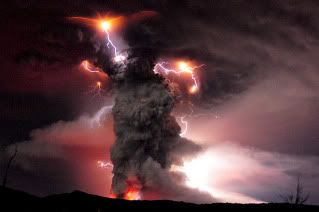
"There are many things happening around us, a good number coming from the ground. Holes in the earth's crust have developed from Siberia to Indiana to Louisiana. There are rumblings of volcanic activity from Iceland to Yellowstone. The strongest earthquake in Napa Valley in more than a quarter of a century struck over the weekend, followed by significant if not destructive trembles in Chile and Peru. This is of particular note because historically major quakes have come one after another despite distances between them of thousands of miles. We really don't understand the earth. Shortly after the great 1906 earthquake in San Francisco there was a huge tremor in the Aleutian Islands, and just thirty minutes after that was a yet greater one in Chile. There were major quakes that year in New Guinea, Australia, the Antilles, China, and again in Chile. Some of the sinkholes and quakes (see: Oklahoma) are caused by drilling. But it is way beyond what humans do. We do not create volcanic activity. Some of it seems to reflect on an alleged prophecy from the famous apparitions of the Blessed Mother at LaSalette, France, where it was asserted (in a part of the messages that did not meet with official Church approbation) that "nature begs vengeance on account of men, and she shudders with dread, awaiting what must happen to the crime-stained earth. Tremble, earth, and you who profess to serve Jesus Christ, while interiorly you adore yourselves, tremble; for God will hand you over to His enemy, because the holy places are in a state of corruption; many convents are no longer houses of God, but pastures for Asmodeus and his own... The seasons will be changed, the earth will produce only bad fruits, the heavenly bodies will lose the regularity of their movements, the moon will reflect only a feeble reddish light; water and fire will lend convulsive motions to the earth's sphere, causing mountains , cities, etc., to be swallowed up."
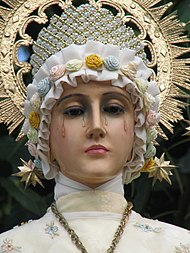
 This all is interesting in light of recent claims that in January of 1944 Sister Lucia dos Santos, seer from Fatima, while in front of the tabernacle in the convent's chapel (imploring God for enlightenment as to His Will, as far as writing down the "third secret"), "felt my spirit flooded by a light-filled mystery which is God and in Him I saw and heard: the point of the flame-like lance which detaches, touches the axis of the earth and it [the earth] shakes: mountains, cities, towns and villages with their inhabitants are buried. The sea, rivers and clouds leave their bounds, they overflow, flood and drag with them into a whirlpool, houses and people in a number unable to be counted; it is the purification of the world from the sin it is immersed in. Hatred, ambition, cause destructive wars. Afterward I felt in the increased beating of my heart and in my spirit a quiet voice which said: ‘in time, one faith, one baptism, one Church, Holy, Catholic, Apostolic. Heaven in eternity!’" This allegedly comes from an unpublished diary alluded to by her fellow sisters in an official publication of the Carmel of Coimbra.
 It is very interesting in this time of "rumblings" (which we will be addressing in a special way next month, at retreats in California, and then New Orleans). No one is saying it's a "rapture" or the "end of the world." We are speaking of purification -- as told to seers who have the approval of the formal Church.
"There are many things happening around us, a good number coming from the ground. Holes in the earth's crust have developed from Siberia to Indiana to Louisiana. There are rumblings of volcanic activity from Iceland to Yellowstone. The strongest earthquake in Napa Valley in more than a quarter of a century struck over the weekend, followed by significant if not destructive trembles in Chile and Peru. This is of particular note because historically major quakes have come one after another despite distances between them of thousands of miles. We really don't understand the earth. Shortly after the great 1906 earthquake in San Francisco there was a huge tremor in the Aleutian Islands, and just thirty minutes after that was a yet greater one in Chile. There were major quakes that year in New Guinea, Australia, the Antilles, China, and again in Chile. Some of the sinkholes and quakes (see: Oklahoma) are caused by drilling. But it is way beyond what humans do. We do not create volcanic activity. Some of it seems to reflect on an alleged prophecy from the famous apparitions of the Blessed Mother at LaSalette, France, where it was asserted (in a part of the messages that did not meet with official Church approbation) that "nature begs vengeance on account of men, and she shudders with dread, awaiting what must happen to the crime-stained earth. Tremble, earth, and you who profess to serve Jesus Christ, while interiorly you adore yourselves, tremble; for God will hand you over to His enemy, because the holy places are in a state of corruption; many convents are no longer houses of God, but pastures for Asmodeus and his own... The seasons will be changed, the earth will produce only bad fruits, the heavenly bodies will lose the regularity of their movements, the moon will reflect only a feeble reddish light; water and fire will lend convulsive motions to the earth's sphere, causing mountains , cities, etc., to be swallowed up."
This all is interesting in light of recent claims that in January of 1944 Sister Lucia dos Santos, seer from Fatima, while in front of the tabernacle in the convent's chapel (imploring God for enlightenment as to His Will, as far as writing down the "third secret"), "felt my spirit flooded by a light-filled mystery which is God and in Him I saw and heard: the point of the flame-like lance which detaches, touches the axis of the earth and it [the earth] shakes: mountains, cities, towns and villages with their inhabitants are buried. The sea, rivers and clouds leave their bounds, they overflow, flood and drag with them into a whirlpool, houses and people in a number unable to be counted; it is the purification of the world from the sin it is immersed in. Hatred, ambition, cause destructive wars. Afterward I felt in the increased beating of my heart and in my spirit a quiet voice which said: ‘in time, one faith, one baptism, one Church, Holy, Catholic, Apostolic. Heaven in eternity!’" This allegedly comes from an unpublished diary alluded to by her fellow sisters in an official publication of the Carmel of Coimbra.
If authentic (it was reported by a well-known Vatican journalist, Antonio Socci), it hearkens back to LaSalette and forward to apparitions -- likewise approved -- at Kibeho, Rwanda, where one of the sanctioned visionaries, Anathalie Mukamazimpaka, told us she had a vision of an event in which "I saw mountains crashing into each other, stones coming out of the earth, nearly as if they were angry. I saw storms crashing against each other and fire coming from them. I don't know what this means. I was told that people are causing this and that it is coming."
It is very interesting in this time of "rumblings" (which we will be addressing in a special way next month, at retreats in California, and then New Orleans). No one is saying it's a "rapture" or the "end of the world." We are speaking of purification -- as told to seers who have the approval of the formal Church.
While we long had assumed that the image in the third secret -- of an angel ready to torch the world -- had to do with potential nuclear conflict (for it involved fire, and Fatima focused on the threat of Russia), or a comet, the diary entry, if valid, gives us pause and causes us to think in geologic terms.
The earth: is it beginning to convulse? And when it comes to pareidolia, did you ever note, in those volcanic clouds, the angry "faces"?
Rumblings. Fish die-offs. Climate swerves.
One day, we will realize a deeper component to nature."
In an article which may be found
here, the Los Angeles Times reports:
"After a relatively quiet period of seismic activity in the Los Angeles area,

Related reading here.

"After a relatively quiet period of seismic activity in the Los Angeles area,
the last five months have been marked by five
earthquakes larger than 4.0. That hasn't occurred since 1994, the year of the
destructive Northridge earthquake that produced 53 such temblors.
Over the next two decades, there were some years that passed without a single quake 4.0 or greater.
Earthquake experts said 2014 is clearly a year of increased seismic activity, but they said it's hard to know whether the recent string of quakes suggests that a larger one is on the way. 'Probably this will be it, and there won't be any more 4s. But the chance we will have a bigger earthquake this year is more than if we hadn't had this cluster,' U.S. Geological Survey seismologist Lucy Jones said. 'Every earthquake makes another earthquake more likely.'"
Back in November of 2012, I wrote the following:
The Didache, also known as The Teaching of the Lord to the Gentiles, tells us that, "There are two Ways: a Way of Life and a Way of Death, and the difference between these two Ways is great. The Way of Life is this: Thou shalt love first the Lord thy Creator, and secondly thy neighbor as thyself; and thou shalt do nothing to any man that thou wouldst not wish to be done to thyself...Commit no murder, adultery, sodomy, fornication, or theft. Practise no magic, sorcery, abortion, or infanticide..."
Once again, a majority of Americans (including sadly a large number of those who are so morally blind that they still consider themselves to be Catholic or Christian) have voted for a president who fully embraces the Culture of Death promoting abortion through all nine months of pregnancy up to and including what is known as "partial-birth abortion" - which is really infanticide. A president who has also embraced the Cult of Softness with its agenda to promote sodomy and to re-define marriage. A president who is committed toward attacking the religious freedom of the Catholic Church with his contraceptive mandate.
Americans have voted for self-destruction. It was Abraham Lincoln, in a speech given on January 27, 1837, who forewarned: "At what point then is the approach of danger to be expected? I answer, if it ever reach us, it must spring up amongst us; it cannot come from abroad. If destruction be our lot we must ourselves be its author and finisher. As a nation of freemen we must live through all time, or die by suicide."
The spirit of Antichrist is rising everywhere. A new television program entitled "666 Park Avenue" is currently enjoying popularity. Last week, I stood in line at the bank behind a young man sporting a baseball cap which read 666. Just this morning a car with a Rhode Island license plate passed me on Route 2 from Athol to Gardner, Massachusetts. The number? 6664RI!
Last night, around 11 PM, I was awakened with the knowledge that Mitt Romney had lost the election (I didn't follow the results at all). And I was given a Word of Knowledge: America has opted for sin and the Way of Death. As a result, severe chastisements are coming upon this sin-sick nation. California will soon be stricken with massive earthquakes and the weather is about to turn even more violent* than anyone is prepared for.
Remain in the faith my friends. Pray every day to the Sacred Heart of Jesus and the Immaculate Heart of Mary. Destruction is coming upon this nation which has forsaken God.
* And hasn't it? See here
Over the next two decades, there were some years that passed without a single quake 4.0 or greater.
Earthquake experts said 2014 is clearly a year of increased seismic activity, but they said it's hard to know whether the recent string of quakes suggests that a larger one is on the way. 'Probably this will be it, and there won't be any more 4s. But the chance we will have a bigger earthquake this year is more than if we hadn't had this cluster,' U.S. Geological Survey seismologist Lucy Jones said. 'Every earthquake makes another earthquake more likely.'"
Back in November of 2012, I wrote the following:
The Didache, also known as The Teaching of the Lord to the Gentiles, tells us that, "There are two Ways: a Way of Life and a Way of Death, and the difference between these two Ways is great. The Way of Life is this: Thou shalt love first the Lord thy Creator, and secondly thy neighbor as thyself; and thou shalt do nothing to any man that thou wouldst not wish to be done to thyself...Commit no murder, adultery, sodomy, fornication, or theft. Practise no magic, sorcery, abortion, or infanticide..."
Once again, a majority of Americans (including sadly a large number of those who are so morally blind that they still consider themselves to be Catholic or Christian) have voted for a president who fully embraces the Culture of Death promoting abortion through all nine months of pregnancy up to and including what is known as "partial-birth abortion" - which is really infanticide. A president who has also embraced the Cult of Softness with its agenda to promote sodomy and to re-define marriage. A president who is committed toward attacking the religious freedom of the Catholic Church with his contraceptive mandate.
Americans have voted for self-destruction. It was Abraham Lincoln, in a speech given on January 27, 1837, who forewarned: "At what point then is the approach of danger to be expected? I answer, if it ever reach us, it must spring up amongst us; it cannot come from abroad. If destruction be our lot we must ourselves be its author and finisher. As a nation of freemen we must live through all time, or die by suicide."
The spirit of Antichrist is rising everywhere. A new television program entitled "666 Park Avenue" is currently enjoying popularity. Last week, I stood in line at the bank behind a young man sporting a baseball cap which read 666. Just this morning a car with a Rhode Island license plate passed me on Route 2 from Athol to Gardner, Massachusetts. The number? 6664RI!
Last night, around 11 PM, I was awakened with the knowledge that Mitt Romney had lost the election (I didn't follow the results at all). And I was given a Word of Knowledge: America has opted for sin and the Way of Death. As a result, severe chastisements are coming upon this sin-sick nation. California will soon be stricken with massive earthquakes and the weather is about to turn even more violent* than anyone is prepared for.
Remain in the faith my friends. Pray every day to the Sacred Heart of Jesus and the Immaculate Heart of Mary. Destruction is coming upon this nation which has forsaken God.
* And hasn't it? See here
Related reading here.
Sunday, December 04, 2011
The United States Senate and the National Defense Authorization Act: Repealing bans on the most grievous sins

Article 125 of the UCMJ read:
a) Any person subject to this chapter who engages in unnatural carnal copulation with another person of the same or opposite sex or with an animal is guilty of sodomy. Penetration , however slight, is sufficient to complete the offense.
(b) Any person found guilty of sodomy shall be punished as a court-martial may direct.
The UCMJ has always viewed same-sex intercourse and bestiality as unnatural. What has changed? Other than the fact that certain U.S. Senators, due to moral cowardice, have decided to cater to radical homosexual activists who demand that their unnatural vice be granted societal approval?
Aquinas on Unnatural Sex
Thomas Aquinas (1224/25-75) is commonly regarded as the greatest Western philosopher of the thirteenth century. In a series of works he addressed all the current issues of theology and philosophy, and in particular the problem Christian thinkers had in dealing with the arrival of good editions of the works of Aristotle in the West.
Aquinas was both intensely productive and quite flexible in his approaches. [On occasion he reportedly was able to write, via dictation, two or more works at a time]. Because of the formidable extent of his works, it is often his two great summas to which we turn to find out what he thought. This is not always wise. The summas were consciously written as compendia, and Aquinas addressed a number of theoretical issues in smaller subject specific treatises. Moreover, many of the common questions in thirteenth centuiy academic discussion were based on questions from the basic Theologiael textbook, Peter Lombard's Four Books of Sentences, and it is to Aquinas' commentaries on these that one should turn for his discussion of issues such as women clergy, or the moment of consecration.
The summas [the Summa Theologiae and the Summa Contra Gentiles] are, however, useful. Echoing the disputation methods of university teaching, the Summa Theologiae presents a summation of Aquinas' opinions on issues from the existence of God, to the sacremental system, to basic moral rules.
The selection here addresses Aquinas discussion of sex and sexuality. It shows both his typical methods - his willingness to face objections openly, his use of authorities, and his use of logic - as well as the effort to construct the intractable realities of human experience into a structured and analyzable form.
Extracts from Summa Theologiae II-II, question 154
The following issues are addressed by Aquinas in these selections:-
Summa Theologica II-II, 154, 11: Whether the unnatural vice is a species of lust?
Summa Theologiae II-II, 154, 12: Whether the unnatural vice is the greatest sin among the species of lust? Aquinas' discussion of sexual morality in general [which includes fornication, incest, and rape], is available in a separate document, Aquinas on Sex
Summa Theologica II-II, 154, 11
Whether the unnatural vice is a species of lust?
Objection 1. It would seem that the unnatural vice is not a species of lust. For no mention of the vice against nature is made in the enumeration given above (1, Objection 1). Therefore it is not a species of lust.
Objection 2. Further, lust is contrary to virtue; and so it is comprised under vice. But the unnatural vice is comprised not under vice, but under bestiality, according to the Philosopher (Ethic. vii, 5). Therefore the unnatural vice is not a species of lust.
Objection 3. Further, lust regards acts directed to human generation, as stated above (153, 2): Whereas the unnatural vice concerns acts from which generation cannot follow. Therefore the unnatural vice is not a species of lust.
On the contrary, It is reckoned together with the other species of lust (2 Cor. 12:21) where we read: "And have not done penance for the uncleanness, and fornication, and lasciviousness," where a gloss says: "Lasciviousness, i.e., unnatural lust."
I answer that, As stated above (A6,9) wherever there occurs a special kind of deformity whereby the venereal act is rendered unbecoming, there is a determinate species of lust. This may occur in two ways: First, through being contrary to right reason, and this is common to all lustful vices; secondly, because, in addition, it is contrary to the natural order of the venereal act as becoming to the human race: and this is called "the unnatural vice." This may happen in several ways. First, by procuring pollution, without any copulation, for the sake of venereal pleasure: this pertains to the sin of "uncleanness" which some call "effeminacy." Secondly, by copulation with a thing of undue species, and this is called "bestiality." Thirdly, by copulation with an undue sex, male with male, or female with female, as the Apostle states (Rm. 1:27): and this is called the "vice of sodomy." Fourthly, by not observing the natural manner of copulation, either as to undue means, or as to other monstrous and bestial manners of copulation.
Reply to Objection 1. There we enumerated the species of lust that are not contrary to human nature: wherefore the unnatural vice was omitted.
Reply to Objection 2. Bestiality differs from vice, for the latter is opposed to human virtue by a certain excess in the same matter as the virtue, and therefore is reducible to the same genus.
Reply to Objection 3. The lustful man intends not human generation but venereal pleasures. It is possible to have this without those acts from which human generation follows: and it is that which is sought in the unnatural vice.
Summa Theologica II-II, 154, 12
Whether the unnatural vice is the greatest sin among the species of lust?
Objection 1. It would seem that the unnatural vice is not the greatest sin among the species of lust. For the more a sin is contrary to charity the graver it is. Now adultery, seduction and rape which are injurious to our neighbor are seemingly more contrary to the love of our neighbor, than unnatural sins, by which no other person is injured. Therefore the unnatural sin is not the greatest among the species of lust.
Objection 2. Further, sins committed against God would seem to be the most grievous. Now sacrilege is committed directly against God, since it is injurious to the Divine worship. Therefore sacrilege is a graver sin than the unnatural vice.
Objection 3. Further, seemingly, a sin is all the more grievous according as we owe a greater love to the person against whom that sin is committed. Now the order of charity requires that a man love more those persons who are united to him---and such are those whom he defiles by incest---than persons who are not connected with him, and whom in certain cases he defiles by the unnatural vice. Therefore incest is a graver sin than the unnatural vice.
Objection 4. Further, if the unnatural vice is most grievous, the more it is against nature the graver it would seem to be. Now the sin of uncleanness or effeminacy would seem to be most contrary to nature, since it would seem especially in accord with nature that agent and patient should be distinct from one another. Hence it would follow that uncleanness is the gravest of unnatural vices. But this is not true. Therefore unnatural vices are not the most grievous among sins of lust.
On the contrary, Augustine says (De adult. conjug. [The quotation is from Cap. Adulterii xxxii, qu. 7. Cf. Augustine, De Bono Conjugali, viii.]) that "of all these," namely the sins belonging to lust, "that which is against nature is the worst."
I answer that, In every genus, worst of all is the corruption of the principle on which the rest depend. Now the principles of reason are those things that are according to nature, because reason presupposes things as determined by nature, before disposing of other things according as it is fitting. This may be observed both in speculative and in practical matters. Wherefore just as in speculative matters the most grievous and shameful error is that which is about things the knowledge of which is naturally bestowed on man, so in matters of action it is most grave and shameful to act against things as determined by nature. Therefore, since by the unnatural vices man transgresses that which has been determined by nature with regard to the use of venereal actions, it follows that in this matter this sin is gravest of all. After it comes incest, which, as stated above (09), is contrary to the natural respect which we owe persons related to us.
With regard to the other species of lust they imply a transgression merely of that which is determined by right reason, on the presupposition, however, of natural principles. Now it is more against reason to make use of the venereal act not only with prejudice to the future offspring, but also so as to injure another person besides. Wherefore simple fornication, which is committed without injustice to another person, is the least grave among the species of lust. Then, it is a greater injustice to have intercourse with a woman who is subject to another's authority as regards the act of generation, than as regards merely her guardianship. Wherefore adultery is more grievous than seduction. And both of these are aggravated by the use of violence. Hence rape of a virgin is graver than seduction, and rape of a wife than adultery. And all these are aggravated by coming under the head of sacrilege, as stated above (10, ad 2).
Reply to Objection 1. Just as the ordering of right reason proceeds from man, so the order of nature is from God Himself: wherefore in sins contrary to nature, whereby the very order of nature is violated, an injury is done to God, the Author of nature. Hence Augustine says (Confess. iii, 8): "Those foul offenses that are against nature should be everywhere and at all times detested and punished, such as were those of the people of Sodom, which should all nations commit, they should all stand guilty of the same crime, by the law of God which hath not so made men that they should so abuse one another. For even that very intercourse which should be between God and us is violated, when that same nature, of which He is the Author, is polluted by the perversity of lust."
Reply to Objection 2. Vices against nature are also against God, as stated above (ad 1), and are so much more grievous than the depravity of sacrilege, as the order impressed on human nature is prior to and more firm than any subsequently established order.
Reply to Objection 3. The nature of the species is more intimately united to each individual, than any other individual is. Wherefore sins against the specific nature are more grievous.
Reply to Objection 4. Gravity of a sin depends more on the abuse of a thing than on the omission of the right use. Wherefore among sins against nature, the lowest place belongs to the sin of uncleanness, which consists in the mere omission of copulation with another. While the most grievous is the sin of bestiality, because use of the due species is not observed. Hence a gloss on Gn. 37:2, "He accused his brethren of a most wicked crime," says that "they copulated with cattle." After this comes the sin of sodomy, because use of the right sex is not observed. Lastly comes the sin of not observing the right manner of copulation, which is more grievous if the abuse regards the "vas" than if it affects the manner of copulation in respect of other circumstances.
This text is part of the Internet Medieval Source Book. The Sourcebook is a collection of public domain and copy-permitted texts related to medieval and Byzantine history.
Paul Halsall
March 1996
halsall@murray.fordham.edu
Our Senators have voted to repeal bans on the most grievous sins. They have opted to condone such evils.
Subscribe to:
Posts (Atom)