Showing posts with label Grave. Show all posts

Sunday, April 17, 2022

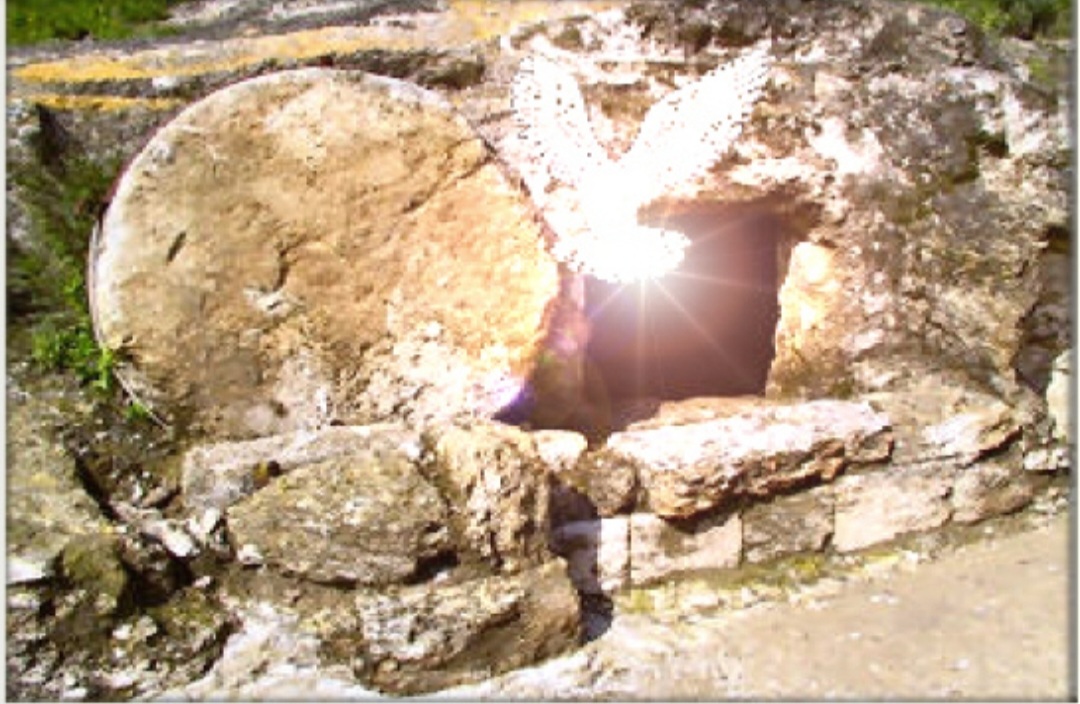
We have hope because of the empty grave


The earth is a giant graveyard.  But we have hope because one of these graves is empty.  Christ Jesus came to save us from sin and its consequence: death (Romans 6: 23).  And as Dr. Peter Kreeft once said, "The Resurrection also sharply distinguishes Jesus from all the other religious founders.  The bones of Abraham and Muhammad and Buddha and Confucius and Lao-tzu and Zoroaster are still here on earth.  Jesus' tomb is empty.  The existential consequences of the resurrection are incomparable.  It is the concrete, factual, empirical proof that: life has hope and meaning; 'love is stronger than death'; goodness and power are ultimately allies, not enemies; life wins in the end; God has touched us right where we are and has defeated our last enemy; we are not cosmic orphans, as our modern secular worldview would make us.."


In his poem entitled "The Convert," Gilbert Keith Chesterton so eloquently presents this truth:


After one moment when I bowed my head


And the whole world turned over and came upright,

And I came out where the old road shone white,

I walked the ways and heard what all men said,

Forests of tongues, like autumn leaves unshed,

Being not unlovable but strange and light;

Old riddles and new creeds, not in despite

But softly, as men smile about the dead.


The sages have a hundred maps to give

That trace their crawling cosmos like a tree,

They rattle reason out through many a sieve

That stores the sand and lets the gold go free:

And all these things are less than dust to me

Because my name is Lazarus and I live.


"The light shines in the darkness, and the darkness has not overcome it" (Jn 1:5).  And it never will.  Not even that supreme darkness and deception which is fast-approaching (Catechism of the Catholic Church, 675).  Our sad broken world is dying.  Heaven and earth will pass away.  But not the word of the Living God.

Sunday, August 12, 2018

Dr. Richard Sipe and the systemic homosexual problem within the Catholic Church


A letter written by Dr. Richard Sipe to San Diego Bishop McElroy highlights just how depraved clerical culture has become throughout the Catholic Church in the United States (and beyond).

This letter, unlike the Francis style approach with its false compassion, is imbued with authentic compassion.

Pope Saint Pius X, in his 1910 Catechism, teaches us that sodomy ranks second in gravity to voluntary homicide, among the sins that "cry out to God for vengeance." According to this Catechism, these sins "are said to cry out to God because the Holy Spirit says so and because their iniquity is so grave and manifest that it provokes God to punish with more severe chastisements."

The Catechism of the Catholic Church published by the Vatican in 1994 teaches clearly that homosexuality is contrary to nature and that homosexual acts are among the "sins gravely contrary to chastity." (CCC, 2396). This Catechism teaches that homosexual acts are "intrinsically disordered," "contrary to the natural law," and that "under no circumstances can they be approved." (CCC, 2357).

There are those within the Church, both priests and laity, who would have us believe that Christian "compassion" for homosexual persons should leave such individuals comfortable in their sin.


Now while it is true that everything must be done to help sinners, this cannot include helping them to sin or to remain in sin. Because of human frailty, every sinner deserves both pity and compassion. However, vice and sin must be excluded from this compassion. This because sin can never be the proper object of compassion. (Summa Theologica, II-II, q. 30, a.1, ad 1).

It is a false compassion which supplies the sinner with the means to remain attached to sin. Such "compassion" provides an assistance (whether material or moral) which actually enables the sinner to remain firmly attached to his evil ways. By contrast, true compassion leads the sinner away from vice and back to virtue. As Thomas Aquinas explains:

"We love sinners out of charity, not so as to will what they will, or to rejoice in what gives them joy, but so as to make them will what we will, and rejoice in what rejoices us. Hence it is written: 'They shall be turned to thee, and thou shalt not be turned to them.'" (St. Thomas Aquinas, Summa Theologica, II-II, q. 25, a.6, ad 4, citing Jeremiah 15:19).

St. Thomas Aquinas teaches us that the sentiment of compassion only becomes a virtue when it is guided by reason, since "it is essential to human virtue that the movements of the soul should be regulated by reason." (Summa Theologica, II-II, q. 30, c.3). Without such regulation, compassion is merely a passion. A false compassion is a compassion not regulated and tempered by reason and is, therefore, a potentially dangerous inclination. This because it is subject to favoring not only that which is good but also that which is evil (Summa Theologica, II-II, q. 30, a.1, ad 3).

An authentic compassion always stems from charity. True compassion is an effect of charity (Summa Theologica, II-II, q. 30, a.3, ad 3). But it must be remembered that the object of this virtue is God, whose love extends to His creatures. (Summa Theologica, II-II, q. 25, a.3). Therefore, the virtue of compassion seeks to bring God to the one who suffers so that he may thereby participate in the infinite love of God. As St. Augustine explains:

"'Thou shalt love thy neighbor as thyself.' Now, you love yourself suitably when you love God better than yourself. What, then, you aim at in yourself you must aim at in your neighbor, namely, that he may love God with a perfect affection." (St. Augustine, Of the Morals of the Catholic Church, No. 49, which may be found here: http://www.newadvent.org/fathers/1401.htm).

Homosexual behavior is now a systemic problem within the Church.  I've been writing about this since 1991.  And I have been dismissed, mocked and ridiculed during those nearly 30 years.

Few are mocking any longer.

Monday, September 18, 2017

Father James Martin, S.J.: Unbeliever or demoniac?

Over at Fatima Network Perspectives, Christopher Ferrara writes:

"As I have already shown..
behind Father James Martin’s treacly grin is a cunning subversive on a mission to overturn, if it were possible, the Church’s infallible teaching, rooted in the divine and natural law, that homosexual acts are “acts of grave depravity, … [as] tradition has always declared that ‘homosexual acts are intrinsically disordered’…; Under no circumstances can they be approved.”

On and on Father Martin goes, preaching the lie that homosexual acts are not only not depraved, but on the contrary are genuine expressions of what he calls “love.”  Martin even dared to proclaim openly during a conference at Fordham University (my alma mater) that there is nothing wrong with the depraved acts performed by his homosexual friend “Mark” and that he professes not to understand how “even the most traditionalist, homophobic, closed-minded Catholic cannot look at my friend and say: that is a loving act...”

As Scripture makes clear, the irreproachable Justice of God recognizes the sin of Sodom as one of the four sins that “cry out” to Heaven for divine retribution, along with murder, the oppression of widows and orphans, and cheating workers out of their just wages.  (Cf. Gen. 4:10; Gen. 18:20-21; Exod. 21-23;Deut. 24:14-15). Of course, these sins may be forgiven by the merciful God through the ministry of the Church. Nor does the Church teach hatred of those who commit such sins, but on the contrary her perennial counsel is “hate the sin, love the sinner.”

But forgiveness is not possible without repentance and a resolution to sin no more.  Martin, on the other hand, denies the need for repentance and teaches that intrinsically depraved homosexual acts are good.  This is simply monstrous.  And yet not only does he get away with it, day in and day out, he has even been given a promotion to the status of a consultor to the Pontifical Council for Social Communications..."

Of course, Francischurch is committed toward genuflecting before the Devil.

Today we are living in the most decadent, violent and faithless period in the history of mankind. But many cannot see this because they have succumbed to satanic pride. Satan fell in love with his own beauty and wound up rebelling against God and leading other angels to do the same, drawing them to Hell.

Today, bishops, priests, religious and laity, puffed up with satanic pride, have become enamored with themselves and their "intellectual prowess." And like their master, the father of all lies (John 8: 44), these too are now rebelling against God and His Holy Church.

These sons of Hell spend much of their waking hours contradicting Sacred Scripture, denying dogma and popularizing immorality. These pseudo-intellectuals arrogantly divinize man's intellect while ridiculing the Word of God. Saint Paul spoke of these disciples of Lucifer in 2 Timothy 4: 1-4: "I charge you to preach the word, to stay with this task whether convenient or inconvenient - correcting, reproving, appealing - constantly teaching and never losing patience. For the time will come when people will not tolerate sound doctrine, but, following their own desires, will surround themselves with teachers who tickle their ears. They will stop listening to the truth and will wander off to fables."

In Romans 1, Saint Paul emphasizes the fact that there is a connection between a refusal to acknowledge and obey God and a subsequent degeneration of morality. And yet, with all the sex abuse scandals within the Church and all the sexual immorality and dissent, there has been very little discussion about this truth. False worship and pride in one's own intellect cause spiritual blindness and subject men to the destructive and degrading drives of fallen nature - most especially in the area of sex. Saint Paul tells us that people who fall into such spiritual blindness begin to encourage others to do so. And so infidelity spreads like a cancer.

There is an increasingly hostile attitude toward Sacred Scripture on the part of many who believe that they can "correct" God's Word. Still others, as you note, alter the scriptures because a particular verse convicts them.

Contrast this arrogance with the Church Fathers. When confronted with such an arrogant approach to God's Word, they responded in no uncertain terms:

"They have not feared to lay hands upon the sacred Scriptures, saying that they have corrected them. Nor is it likely that they themselves are ignorant of how very bold their offense is. For either they do not believe that the sacred Scriptures were spoken by the Holy Spirit, in which case they are unbelievers, or if they regard themselves as being wiser than the Holy Spirit, what else can they be but demoniacs." (St. Hippolytus of Rome, "Fragment" in Eusebius, History of the Church, 5, ch. 28).

Father Martin is one or the other.  In either case, he has forfeited any and all credibility with serious Catholics who adhere to Church teaching.

Tuesday, May 30, 2017

A resignation made out of grave fear.. is invalid by the law itself

An interesting question is posed at non veni pacem today.  See here.

Canon 332.2 of the Code of Canon Law States clearly that:

§2. If it happens that the Roman Pontiff resigns his office, it is required for validity that the resignation is made freely and properly manifested but not that it is accepted by anyone.

Canon 188 States that:

"A resignation made out of grave fear that is inflicted unjustly or out of malice, substantial error, or simony is invalid by the law itself."

At his inauguration, Pope Benedict XVI said, "Pray for me, that I may not flee for fear of the wolves."

Obviously the Holy Father said this for a reason.  If he was motivated by such fear to resign, the resignation would be invalid by the law itself.

Sunday, November 02, 2014

It is a grave error to imagine that the highest authority is the Pope

I thought I would publish this excellent article without comment.  I believe Mark Mallett could benefit from reading it prayerfully.  Then again, maybe not.


It Just Doesn't Matter Anymore
Written by  Megaera Erinyes


Dear Miss Erinyes

I'm just wondering what your opinion is. Do you think that Francis really is pope? I cannot imagine the real pope doing and saying the things that Francis is doing and saying.

Do you think that it is possible that the last conclave was rigged, making Francis' election illegitimate?

Fr. M
_

Dear Father,

The truth is that I have no idea. I am not a canonist; I have no training in theology or Church history and have no special ability to discern between the various arguments now being commonly bruited about the internet. I can see that we have a very large problem, one in the person of Francis that seems to equal the horrifying problems in the world. He seems to me to be, indeed, an intrinsic part of those external problems, a product of them, one might even say.
Unfortunately, I also have no special knowledge, other than what can be found out on the internet, about what happened in the Vatican in the last 2 years. I know what I have seen, and what I have heard, and it is obviously going to go down in Church history (if there is going to be anyone to write such things down in what is left of our future) as one of our most dangerous and inexplicable periods. Other than that, I know what anyone knows; rumours and counter rumours.

What I can see as a simple observer is that we are in a situation, with the Church and the world as a whole, that is apparently totally unprecedented in our long history. I hope you will forgive a long answer, since your question, as simple as it seems, encompasses quite a lot.

I suppose it is possible, and has probably happened in the past, that a pope has been brought out of illicit elections who really is pope, and has gone on to do his duty as perfectly as any pope. I don't think that the nature of the election process is so crucial, though given our situation I can see why it is an attractive answer. We have a serious problem with Bergoglio, and it is one that an irregular election would solve, if it could be proved. What a relief it would be to simply shrug off his strange speeches by saying, “Oh, just more anti-pope talk.”  Tempting indeed.

But I think there is a more generally useful answer that can be taken on board by any Catholic who still believes: If the pope is not a Catholic, and is pursuing goals contrary to those of Christ, does it matter if he is canonically an anti-pope? Does it matter if the election process was violated in this or that way?

Since the Ascension of Our Lord, we Christians have been charged with the conversion of the whole world. I do not find it surprising that it has taken us 2000 years to accomplish this, particularly since at the time the charge was given we still had much of the world left to discover and were dependent upon others to invent things like sailing ships and oceanic navigational tools. Given distractions like the human love of making war and the Black Death, I find a time frame of two millennia to be fairly reasonable. But in the end, by the end of the 19th century or thereabouts, I think we have done as well as we could be expected to do.

Christ is known throughout the world, even to people who, in the age of iPhones still live in round tents made of reindeer skins. There are Christians in every jungle, in every city, in every university, in every prison, every mine, every desert, and the blood of the martyrs has soaked with equal ubiquity into every soil and sand on earth. I think, though of course there are still millions unconverted, in general terms we have done what we were told to do. That He has also been rejected, again, by the majority of those who have heard Him, is not something we can control today any more than His friends could control it then.

My own ancestors were brought into the Faith a long time ago, while there was still an Emperor in Rome. But I have a good friend whose country did not see a Christian missionary until the 15th century. I met a bishop some time ago who said the first Catholic missionary didn't arrive in his country until the 1950s. But now, in the age of the internet, moreover, there can only be a handful of people left on earth (North Korea?) who have had no exposure at all to Christ and His truth.

So the Big Job we were given by the Second Person of the Holy Trinity, for Whom and through Whom all things were made, appears to be mainly done. Everyone has heard it, and those who are going to respond have done so. Which realisation came home to me shortly after that distressing night last March: the one communal task we have as human beings and as Catholics, is complete, so what comes next?

And now looking at the precedent, which is something quite natural to Catholics, I find that I cannot discover any precise parallel. We have a pope... a pope! who is capable of uttering complete nonsense, like "Corruption is a worse evil than sin," who not only appears to believe that it makes some kind of sense but who is instantly lauded and praised by millions of people, Catholics included, for having said it.


Have we ever in all our long history had the great mass of the Catholic faithful know so little of the doctrine of the Faith while at the same time positively believing so much that is directly opposed to it? We have converted the world to the Faith, indeed, but it seems that immediately after the completion of this great task, through a strange and inexplicable confluence of social and historical factors, the world has instantly lost it again.

Could we ever imagine another time in which millions of Catholics believe it is possible to be a "pro-choice Catholic"? Or who could possibly believe themselves to be good Catholics who accept concubinage as a moral good? Or even worse, unnatural perversions? And these, perhaps even more importantly, never definitively corrected by either bishop or pope?

But apparently we look to Rome in vain, for we have now seen, before all the eyes of the world in the first two weeks of this month, that these beliefs are not held only by the vast masses of Catholic laity, but are equally the belief of a plain majority of the men who attended the Synod as successors of the Apostles! What kind of precedent do we have for a Church, in the person of its most senior ministers, which has lost its own reason for existence, its own Faith? What does God say is to be done with salt that is no longer salty?

The approved prophets of the Catholic Church, all those visionaries who had visits in their little stone huts from the glorious Queen of Heaven, have all conveyed more or less the same message: that a time will come, soon, indeed is even upon us, of a "great apostasy," when there will be a vast loss of the hard-won Faith, and a terrible darkness will descend upon the world as a result. And the one historical reality that I cannot help but think of is the indiscriminate slaughter of, by now, perhaps billions of human beings before birth, with barely more than silence as a response from those consecrated to the service of God. All those holy prophets have said that this time of apostasy, that I cannot help but believe is upon us now, will be followed, and ended, by the most terrifying supernatural chastisement the world has ever seen. And looking at the abortion statistics it seems just, since evil on such a scale cannot go unanswered forever.

So, returning to your question, my answer is that I believe it to be moot. We are looking to the past for precedent in the answer to the conundrum of this strange and obviously intellectually corrupted man, Bergoglio. But if precedent is not helping us with any of the other strangenesses of the modern Church why do we look to it for the answer to this pope? Have we ever had a situation in which, after doctrine has been settled for two millennia, the pope opens it to questioning and "debate" at a Synod of bishops? And that Synod of bishops did not instantly shout him down and denounce him as a heretic? Could we possibly imagine that such a body would close its session leaving such issues to remain unanswered, and that swiftly, as to whether we should condone public concubinage or even the bizarre legal fiction of "homosexual unions"?!

I ask you, if the pope is not a Catholic, does it matter if he is an anti-pope? Do such canonically defined categories, dependent upon longstanding precedent, apply to this? How can they?

I do not know what Bergoglio is. But I know that nothing he says makes any sense. I know that he cannot be followed or obeyed, not because of his heresies, which are growing more manifest by the hour, but because of the incomprehensibility, the sheer nonsense of his utterances. There are two kinds of orders a soldier cannot obey: those that contradict the law and those that cannot be understood.

In such a situation, the lower ranks of an army must look to more obviously lawful and mentally competent leadership. And if that fails, which it does in many cases throughout the Catholic world, he is left to follow the law and his duty as best he can with the last intelligible, coherent and explicit orders has been given. He knows in general what the goals of the war are and he knows he has a duty to continue fighting that war until his last breath or until it is won.

If a pope is not a Catholic, does it really matter if he is an anti-pope? I don't pretend to know what really goes on inside the obviously confused and contradictory mind of Jorge Bergoglio, whether his oddness and confusion is a deliberate ruse or if it is simply a sign of dementia or if it is merely illustrative of what happens to a mind formed by Jesuits in the 1960s, but judging strictly from what he says and does, I know that he cannot be prosecuting the same goals in this war that we have been charged with. Two and two do not equal five, even if it is a pope who asserts it. And no solider is bound to follow orders that are contrary to the goals of the war he is in.

It is a grave error to imagine that the highest authority is the pope. He receives his authority from the Head of the Church, and if he begins to stray from his orders, he cannot be obeyed. I cannot determine what he believes, certainly not from what he says, but if he cannot be understood, believed or obeyed within the confines of the Faith we have received, I think I don't care very much whether Francis was elected illicitly or not.

______________________

Our Lady told Fr. Stefano Gobbi of the Marian Movement of Priests:

"I am weeping because the Church is continuing along the road of division, of loss of the true faith, of apostasy and of errors which are being spread more and more without anyone offering opposition to them. Even now, that which I predicted at Fatima and that which I have revealed here in the third message confided to a little daughter of mine (i.e. Sister Lucia) is in the process of being accomplished. And so, even for the Church the moment of its great trial has come, because the man of iniquity will establish himself within it and the abomination of desolation will enter into the holy temple of God." (To the Priests, Our Lady's Beloved Sons, No. 362, September 15, 1987, p. 572.)

And again:

"The black beast like a leopard indicates Freemasonry; the beast with the two horns like a lamb indicates Freemasonry infiltrated into the interior of the Church, that is to say, ecclesiastical Masonry, which has spread especially among the members of the hierarchy. This Masonic infiltration, in the interior of the Church, was already foretold to you by me at Fatima, when I announced to you that Satan would enter in even to the summit of the Church. If the task of Masonry is to lead souls to perdition, bringing them to the worship of false divinities, the task of ecclesiastical Masonry on the other hand is that of destroying Christ and his Church, building a new idol, namely a false christ and a false church." (To the Priests, Our Lady's Beloved Sons, No. 406, June 13, 1989, p. 649)
Saturday, April 23, 2011

The earth is a giant graveyard but we have hope because one of these graves is empty

The earth is a giant graveyard.  But we have hope because one of these graves is empty.  Christ Jesus came to save us from sin and its consequence: death (Romans 6: 23).  And as Dr. Peter Kreeft once said, "The Resurrection also sharply distinguishes Jesus from all the other religious founders.  The bones of Abraham and Muhammad and Buddha and Confucius and Lao-tzu and Zoroaster are still here on earth.  Jesus' tomb is empty.  The existential consequences of the resurrection are incomparable.  It is the concrete, factual, empirical proof that: life has hope and meaning; 'love is stronger than death'; goodness and power are ultimately allies, not enemies; life wins in the end; God has touched us right where we are and has defeated our last enemy; we are not cosmic orphans, as our modern secular worldview would make us.."

In his poem entitled "The Convert," Gilbert Keith Chesterton so eloquently presents this truth:

After one moment when I bowed my head

And the whole world turned over and came upright,
And I came out where the old road shone white,
I walked the ways and heard what all men said,
Forests of tongues, like autumn leaves unshed,
Being not unlovable but strange and light;
Old riddles and new creeds, not in despite
But softly, as men smile about the dead.


The sages have a hundred maps to give
That trace their crawling cosmos like a tree,
They rattle reason out through many a sieve
That stores the sand and lets the gold go free:
And all these things are less than dust to me
Because my name is Lazarus and I live.


"The light shines in the darkness, and the darkness has not overcome it" (Jn 1:5).  And it never will.  Not even that supreme darkness and deception which is fast-approaching (Catechism of the Catholic Church, 675).  Our sad broken world is dying.  Heaven and earth will pass away.  But not the word of the Living God.


Site Meter