The Boston Globe is reporting that, "In his first public remarks on Catholic-Jewish relations, Cardinal Sean P. O'Malley last night said the spirit of God was behind Catholic efforts to purge their religion of centuries of anti-Semitic teaching and traditions. He vowed there would be no retreat from the declarations of kinship between the two faiths that began with the Second Vatican Council in 1965 and deepened under the late Pope John Paul II."
Huh? With all due respect to His Eminence, the Church has always condemned anti-Semitism. There is no history within the Catholic Church of "anti-Semitic teaching and traditions." The Church's respect for Jews didn't begin with the Second Vatican Council:
Beginnings to 1094
Pope Gregory I
"For it is necessary to gather those who are at odds with the Christian religion the unity of faith by meekness, by kindness, by admonishing, by persuading, lest these...should be repeled by threats and terrors. They ought, therefore, to come together to hear from you the Word of God in a kindly frame of mind, rather than stricken with dread, result of a harshness that goes beyond due limits." (Synan,The Popes and the Jews in the Middle Ages,p.45)
June 591 "Censure of Virgil, bishop of Arles, and Theodore, bishop of Marseilles, for having baptized Jews by force. They are to desist. (Simonsohn, Shlomo, p.4)
November 602 "Admonition to Paschasius, bishop of Naples, to ensure that the Jews are not disturbed in the celebration of their religious festivals." (The Apostolic See and the Jews, Documents: 492-1404; Simonsohn, Shlomo, p.23)
"TO PASCASIUS, BISHOP OF NAPLES: Those who, with sincere intent, desire to lead people outside the Christian religion to the correct faith, ought to make the effort by means of what is pleasant, not with what is harsh, lest opposition drive afar the mind of men whom reasoning...could have attracted. Those who act otherwise...demonstrate that they are concerned with their own enterpises, rather than with those of God!
Now, the Jews dwelling in Naples have registered a complaint with Us, asserting that certain people are attempting, in an unreasonable fashion, to restrain them from some of the solemnities connected with their own feast days, as it has been lawful for them to observe or celebrate these up to now, and for their forefathers from long ages past...For of what use is this, when...it avails nothing toward their faith and conversion?...One must act, therefore, in such a way that...they might desire to follow us rather than to fly from us...Rather let them enjoy their lawful liberty to observe and to celebrate their festivities, as they have enjoyed this up until now." (Synan, 217).
Pope John XVIII 1007 "The Jews of France, victims of persecution, are taken under papal protection."
(The Apostolic See and the Jews, Documents: 492-1404; Simonsohn, Shlomo, p.34)
Pope Alexander II
1063 "Praise for Winfred, archbishop of Narbonne, for defending the Jews." 1063 "Praise for Berengar, viscount of Narbonne, for protecting the Jews." 1065 "Admonition to Landulf, lord of Benevento, that the conversion of Jews is not to be obtained by force." (The Apostolic See and the Jews, Documents: 492-1404; Simonsohn, Shlomo, p.35,36,37)
1094 to 1200
With the dawn of the First Crusade, a burst of anti-Semitism also flared up. However, there was also much opposition to this behavior. "Bishops and princes [were] mostly on the side of the [Jewish] victims, but proving for various reasons, powerless to protect them effectively." (Catholic Ency.p.393).
Pope Calixtus II 1119-1124 "The Jews are taken under papal protection."
(The Apostolic See and the Jews, Documents: 492-1404; Simonsohn, Shlomo, p.44)
With the Second Crusade (1147-1149) hatred erupted again. Yet, many would not tolerate the bigotry. The German prelates, Pope Eugenius III, and St. Bernard protested against this eruption of anti-Semitism:
Pope Eugenius III 1145-1153 "The Jews are taken under papal protection."
(The Apostolic See and the Jews, Documents: 492-1404; Simonsohn, Shlomo, p.47)
Saint Bernard of Clairvaux (letter to Archbishop Henry of Mainz, 1146) "Is it not a far better triumph for the Church to convince and convert the Jews than to put them all to the sword? Has that prayer which the Church offers for the Jews...been instituted in vain?"
(Carroll, Warren; The Glory of Christendom, 62).
Things settled down the next fifty years; "in Italy...Pope Alexander III was favourable to them, and the Third Latern Council (1179) passed decrees protecting their religious liberty." (Cath.En.p.393).
Pope Clement III
10 May 1188 "The Jews are taken under papal protection." (The Apostolic See and the Jews, Documents: 492-1404; Simonsohn, Shlomo, p.66)
Once again, when a new crusade (1202-1204) was preached in 1198 anti-Semitism came about again. Some crusaders caught up in misguided enthusiasm massacred Jews. In other areas they were forced out of their towns. "The Jews appealed to [Pope] Innocent III to curb the violence of the crusaders; and in answer the pontiff issued a Constitution which rigorously forbade mob violence and forced baptism, but which apparently had little or no effect." (Cath.En.p.393).
Pope Celestine III 1191-1198 "The Jews are taken under papal protection" (Sicut Judeis...)
(The Apostolic See and the Jews, Documents: 492-1404; Simonsohn, Shlomo, p.68)
1200 to 1300
Pope Gregory IX
6 April 1233 "Mandate, if facts are established, to the archbishops and bishops of France to induce the Christians in their dioceses to stop persecuting the Jews, who had complained to the pope that they were being maltreated and tortured by certain lords, imprisoned and left to die. The Jews are willing to forsake usury. They are to be set free and are not to be injured in person or in property."
3 May 1235 "Protection provided to Jews by standard formula of Sicut Judeis."
17 August 1236 "List of charges against Emperor Frederick II includes the "matter of the Jewish communities of which certain churches were deprived."
5 September 1236 "Mandate to Gerald de Malemort, archbishop of Bordeaus, Peter, bishop of Saintes, John Builloti, bishop of Angouleme, John de Melun, bishop of Poitiers, Hugo, bishop of Sees, William de Saint-Mere-Eglise, bishop of Avranches, Peter de Colmieu, bishop-elect of Rouen, Juhellus de Mathefelon, archbishop of Tours, Geoffroy de London, bishop of Le Mans, William de Beaumont, bishop of Angers, Alan, bishop of Rennes, Robertus, bishop of Nantes, Ramilf, bishop of Quimper, and Philip Berruyer, archbishop-elect of Bourges to force the crusaders of their dioceses who had killed and robbed Jews to provide proper satisfaction for the crimes perpetrated against the Jews and for the property stolen from them. They had complained to the Pope."
5 September 1236 "Request to Louis IX, king of France, to punish the crusaders, murderers and despoilers of the Jews, and to compel them to make restitution."
(The Apostolic See and the Jews, Documents: 492-1404; Simonsohn, Shlomo, p.143,154,162,163,165)
Pope Innocent IV
7 October 1246 "Request and admonition to Thibaut I, king of Navarre, to continue protecting the Jews from persecution and preventing the forced baptism of their children."
22 October 1246 "Confirmation of the protective Bull Sicut Judeis."
12 June 1247 "Admonition and exhortation to Thibaut I (IV), king of Navarre and count of Champagne, to ensure that the Jews of Champagne are reimbursed by their debtors."
5 July 1247 "Mandate to the prelates of Germany and France to annul all measures adopted against the Jews on account of the ritual murder libel, and to prevent accusation of Jews on similar charges."
6 July 1247 "Admonition and exhortation to Thibaut I (IV), king of Navarre and count of Champagne, to ensure that the Jews of Champagne are reimbursed by their debtors."
25 September 1253 "Mandate to the dean of Wurzburg to protect the local Jews from molestation by the citizens, who are in conflict with Hermann of Lobdenburg, the bishop."
(The Apostolic See and the Jews, Documents: 492-1404; Simonsohn, Shlomo, p.188-189,193-195,208)
1247; writes, "Certain of the clergy, and princes, nobles and great lords of your cities and dioceses have falsely devised certain godless plans against the Jews, unjustly depriving them by force of their property, and appropriating it themselves;...they falsely charge them with dividing up among themselves on the Passover the heart of a murdered boy...In their malice, they ascribe every murder, wherever it chance to occur, to the Jews. And on the ground of these and other fabrications, they are filled with rage against them, rob them of their possessions without any formal accusation, without confession, and without legal trial and conviction, contrary to the privileges granted to them by the Apostolic See...Since it is our pleasure that they shall not be disturbed,...we ordain that ye behave towards them in a friendly and kind manner. Whenever any unjust attacks upon them come under your notice, redress their injuries, and do not suffer them to be visited in the future by similar tribulations"
Yet these protests by the pontiffs appeared to go generally unheeded by the Christian states. (Catholic Encyclopedia, 1910 edition, p.393-394).
Pope Alexander IV
1 February 1255 "Exemption to a group of Jewish merchants of Rome from the payment of tolls in the Papal States and the kingdom of Sicily."
22 September 1255 "Protection to Jews by Sicut Judeis Bull."
(The Apostolic See and the Jews, Documents: 492-1404; Simonsohn, Shlomo, p.211)
Pope Urban IV
26 April 1262 "Protection of Jews by Sicut Judeis Bull."
(The Apostolic See and the Jews, Documents: 492-1404; Simonsohn, Shlomo, p.219)
Pope Gregory X
7 October 1272 "Protection of Jews by Sicut Judeis Bull, with additional clauses: a mixed group of witnesses, including a Jew, is to be required to convict Jews; the evidence of a Christian was not to be admissible against Jews accused of ritual murder; in the unlikely event of such a murder being committed, a Jew may be arrested only if caught in the act."
(The Apostolic See and the Jews, Documents: 492-1404; Simonsohn, Shlomo, p.242)
1273; writes in "an encyclical to all Christians forbidding them to baptize Jews by force or to injure their persons, or take away their money, or to disturb them during the celebration of their religious festivals." (Horace K. Mann, Lives of the Popes in the Middle Ages, Volume XVI [London, 1929], p. 496)
As quoted from: http://www.ewtn.com/library/HOMELIBR/JEWS.HTM
7 July 1274 "Confirmation to all Christians of a mandate to protect Jews of Germany against ritual murder libel."
10 September 1274 "Renewal of Sicut Judeis Bull."
(The Apostolic See and the Jews, Documents: 492-1404; Simonsohn, Shlomo, p.245-246)
Pope Nicholas III
"Renewal of Sicut Judeis Bull."
(The Apostolic See and the Jews, Documents: 492-1404; Simonsohn, Shlomo, p.249)
Pope Martin IV
1 March 1281 "Reissue of Sicut Judeis Bull
2 August 1281 "Reissue of Sicut Judeis Bull, with the additiion of a clause limiting the freedom of action of the Inquisition with regard to Jews."
(The Apostolic See and the Jews, Documents: 492-1404; Simonsohn, Shlomo, p.254)
Pope Honorius IV
1285-1287 "Reissue of Sicut Judeis Bull."
17 September 1285 "Confirmation of the provisions and laws promulgated for the government of the kingdom of Sicily, including the punishment for the murder of a Christian, a Jew, or a Moslem."
(The Apostolic See and the Jews, Documents: 492-1404; Simonsohn, Shlomo, p.260)
Pope Nicholas IV
1288-1292 "Reissue of Sicut Judeis Bull."
29 August 1288 "Request and admonition to Emperor Rudolf I to set free Rabbi Meir of Rothenburg."
30 January 1291 "Mandate to the papal vicar in Rome to protect the Jews."
(The Apostolic See and the Jews, Documents: 492-1404; Simonsohn, Shlomo, p.265,266,278)
1300 to 1500
Pope John XXII
9 July 1320 "Request and exhortation to all princes, rulers, officials and local authorities to protect the Jews in the papal territories in France under their jurisdiction against attacks by Shepherds."
(The Apostolic See and the Jews, Documents: 492-1404; Simonsohn, Shlomo, p.319)
Pope Benedict XII
26 June 1335 "Mandate...to Hugo de Vienne, archbishop of Besancon, to grant dispensation to and impose penitence on Vivetus Grosseti de Poligny, a cleric in the archbishop's diocese, who at the age of fifteen, carried wood to help burn Jews at the stake in the village of Arbois, in the diocese of Besancon."
(The Apostolic See and the Jews, Documents: 492-1404; Simonsohn, Shlomo, p.368)
Pope Clement VI
18 December 1345 "Mandate to Hugues de la Roque, rector of the Comtat Venaissin, to allow the Jews who had recently settled there to dwell unmolested, and to let other Jews join them."
8 May 1347 "Request to King Philip VI of France to set free Bernard de Lipasse, bishop of Dax...and others, including Jews, taken prisoner at sea by the French."
5 July 1348 "Reissue of the Bull Sicut Judeis."
26 September 1348 "Mandate to all prelates and other clergy to act against those who persecute the Jews, especially in connection with the outbreak of the plague, admonish them to desist and threaten them with punishment."
1 October 1348 "Reissue of the protective Bull against the persecutors of Jews, especially in connection with the outbreak of the plague."
20 October 1349 "Mandate to all prelates to adopt suitable measures for the suppression of the Flagellants and their supporters, accused of various crimes, including the persecution of the Jews."
(The Apostolic See and the Jews, Documents: 492-1404; Simonsohn, Shlomo, p.389,392,396,398-399)
"While the fearful scourge, known as the "Black Death", desolated Europe. The report that the Jews had caused the scourge by poisoning the wells used by Christians, spread rapidly and was believed in most towns of Central Europe, despite the Bulls issued by Clement VI in July and September, 1348, declaring their falsity. Despite the fact, too, that the same pontiff had solemnly ordered that Jews be not forced into baptism, that their sabbaths, festivals, synagogues, and cemeteries be respected, that no new exactions be imposed on them, they were plundered and murdered in many countries of Central and Northern Europe." http://www.newadvent.org/cathen/08386a.htm
Pope Urban V
5 June 1365 "Reissue of Sicut Judeis Bull."
(The Apostolic See and the Jews, Documents: 492-1404; Simonsohn, Shlomo, p.430)
Pope Clement VII
10 July 1381 "Mandate to the subcollector of papal revenues...to hand over 400 French francs and 80 German florins to Simon de Nantua, a Jew...These sums were confiscated from Ysaac of Tulette...for 'excesses and crimes.' The money belonged to Simon, and Amadeus VI, count of Savoy, had interceded on his behalf."
13 August 1387 "Approval of petition presented by the Jews in the towns of Arles, Avignon, Maguelonne, Uzes and Nimes to revoke the mandate to have them make restitution to their debtors, in view of the harassment to which they had been exposed following its implementation."
(The Apostolic See and the Jews, Documents: 492-1404; Simonsohn, Shlomo, p.483,500)
Pope Boniface IX
1389-1404 "Renewal of the Bull Sicut Judeis.
"In Germany (1384), and in Bohemia (1389, 1399), the Jews were likewise persecuted. Boniface IX had protested, but in vain, against such outrages and slaughters (1389); and it is only in his states, in Italy, and in Portugal, that the Jewish race had any measure of peace during these years of carnage." http://www.newadvent.org/cathen/08386a.htm
23 October 1392 "Appointment of Salamon de Metasia de Sabaduchio, a Jew in Perugia, to status of member of the papal household, and grant of papal protection."
(The Apostolic See and the Jews, Documents: 492-1404; Simonsohn, Shlomo, p.507,512)
Pope Martin V
he declared in 1419: "Whereas the Jews are made in the image of God and a remnat of them will one day be saved, and whereas they have besought our protection: following in the footsteps of our predecessors we command that they be not molested in their synagogues; that their laws, rights, and customs be not assailed; that they be not baptized by force, constrained to observe Christian festivals, nor to wear new badges, and they be not hindered in their business relations with Christians"
After the Austrian and German Jews appealed to him, he spoke in their favor in 1420 and "in 1422, confirmed the ancient privileges of their race."
http://www.newadvent.org/cathen/08386a.htm
Alexander VI (1492-1503)
When the Jews of Rome refused to admit the Jewish refugees from Spain and offered him a bribe of a thousand ducats, he threatened the Roman Jews with expulsion, demanded two thousand ducats from them, and forced them to allow the Jewish refugees entrance. (Synan, 145).
"Alexander made a place at his court for Jewish physicians...One eminent Jew who held such as post was...Maestro Boneto...Expelled from Provence in 1493, he had taken refuge in the papal city of Carpentras, in order to profit by the friendly reception generally to be expected by Jews in towns under the control of the popes. Since this rabbi [also] possessed...remarkable competence in astronomy...it was possible for him to give striking evidence of his gratitude to the Pope. This he did by dedicating to him a work called The Astronomical Ring...By 1499, Maestro Boneto had become...personal physician to Pope Alexander VI, an office he would retain under Leo X." (Synan, 146-147).
[edit]
1500 to 1900
"The early Roman pontiffs of the sixteenth century had Jewish physicians and were favourable to the Jews and the Maranos of their states." http://www.newadvent.org/cathen/08386a.htm
1758, Benedict XIV appoints Cardinal Lorenzo Ganganelli (future Pope Clement XIV) to investigate the accusation of blood libel. After a year of investigation, the cardinal reports back that the accusations are false
See: http://www.chretiens-et-juifs.org/article.php?voir[]=1700&voir[]=1182
Pope Gregory XVI
1837, "when, seeing how poverty and high taxes plunged the [Jewish] community into bankruptcy, he rubbed out all their debts, and helped them with medical aid during the cholera epidemic of that year" (Chadwick, Owen/A History of the Popes 1830-1914/Oxford University Press/2003/p.129).
Pope Leo XIII
1892, Leo XIII defends the Jews in a newspaper interview (Ibid.).
Leo XIII supports French Jewish officer Captain Alfred Dreyfus, who has been accused of treason and "publicly condemned the anti-Semitic campaign against him" (Ibid).
"Protestants everywhere condemned the papacy for the Dreyfus Affair, though the papacy had nothing to do with the matter. So far as he expressed an opinion publicly, Leo XIII was on the side of Dreyfus. In March 1899 he was said to have compared Dreyfus to Jesus on Calvary" (Chadwick, Owen/A History of the Popes 1830-1914/Oxford University Press/2003/p.385).
Under the pontificate of Pope Pius X, many condemned anti-Semitism: "In the Catholic Church the leaders were against any such [anti-Semitic] attitudes towards the Jews. In Vienna one cardinal after another, from Rauscher onwards, tried to prevent race-hatred and especially anti-Semitism in the Church. As political anti-Semitism...grew in Vienna, the bishops issued a joint pastoral letter against anti-Semitism and racialism... In 1895 the rector of the university of Vienna was a Catholic priest, Laurenz Mullner...In a debate on money for the medical school, an anti-Semite attacked the university as Jew-infested. Mullner took the speaker to pieces: 'Read Dante, and what he said about Averroes, a Semite; he was a great spirit. Read Thomas Aquinas, a noble mind and a saint. Even where they do not agree with Jewish scholars they speak in a very different spirit. Every year it is my duty to refute Spinoza. Though I refute him, yet I bow before that great spirit and noble mind.'" (Chadwick, Owen/A History of the Popes 1830-1914/Oxford University Press/2003/p.379,381)
1900 to today
Pius X denounces the accusations against the Russian Jew Mendel Beilis (Ibid.).
Benedict XV
1916, when the American Jews petitioned Benedict on behalf of the Polish Jews, Benedict responded: "The Supreme Pontiff.... as Head of the Catholic Church, which, faithful to its divine doctrines and its most glorious traditions, considers all men as brothers and teaches them to love one another, he never ceases to indicate among individuals, as well as among peoples, the observance of the principles of the natural law, and to condemn everything that violates them. This law must be observed and respected in the case of the children of Israel, as well as of all others, because it would not be comformable to justice or to religion itself to derogate from it solely on account of divergence of religious confessions" 1
Pius XI
1928, Vatican issues a statement later cited by rescueworkers during the Holocaust: "[J]ust as [the Church] reproves all rancours in conflicts between peoples, to the maximum extent condemns hatred of the people once chosen by God, the hatred that commonly goes by the name of anti-Semitism" 1.
Nov. 1931, Pius XI is thanked by the chief rabbi of Milan for opposing anti-Semitism.
"In the spring of 1933, the year Hitler took power, Pius XI met with Rabbi Allesandro da Fano of Milan to express his solidarity with the Jewish community. The Jewish Chronicle reported: 'The pope...had a long private talk with them about the situation of the Jews in Germany. It is understood that the pope was extremely concerned about the sufferings imposed on the Jews and expressed his sympathy with them and his desire to help. Rabbi da Fano, who is eighty-six years of age, is a personal friend of the pope, and was his teacher of Hebrew when the pope was Director of the Catholic Ambrosian Library in Milan' ('The Pope's Desire to Help,' Jewish Chronicle , May 12, 1933, p.28)." From: (Dalin, David G. & Bottum, Joseph/The Pius War/Lexington Books/2004/p.115-116)
Sept. 6, 1938, he says to some Belgian pilgrims that anti-Semitism "is a hateful movement, a movement that we cannot, as Christians, take any part in...Anti-Semitism is inadmissible" (Chadwick, Ibid.).
1939 issue of B'nai B'rith's National Jewish Monthly features him on the frontcover and writes, "Regardless of their personal beliefs, men and women everywhere who believe in democracy and the rights of man have hailed the firm and uncompromising stand of Pope Pius XI against Fascist brutality, paganism, and racial theories. In his annual Christmas message to the College of Cardinals, the great Pontiff vigorously denounced Fascism...The first international voice in the world to be raised in stern condemnation of the ghastly injustice perpetrated upon the Jewish people by brutal tyrannies was Pope Pius XI" (Chadwick, Ibid.).
"Also of note is Pius XI's support for British efforts to help Jewish and other refugees...the Holy See sent out requests to its representatives throughout the world to assist those fleeing oppression and racial persecution; see Cardinal Pacelli's circular telegrams of November 30, 1938, and January 10, 1939 in Actes et Documents 6, pp.48-50, and Pius XI's letter to the cardinal archbishops of Boston, Philadelphia, Chicago, Quebec, and Buenos Aires, pp. 50ff" (Pius War, p.119).
Jan. 1939, The Jewish National Monthly reports "the only bright spot in Italy has been the Vatican, where fine humanitarian statements by the Pope have been issuing regularly" 2.
"When Mussolini's anti-Semitic decrees began depriving Jews of employment in Italy, Pius XI, on his own initiative, admitted Professor Vito Volterra, a famous Italian Jewish mathematician, into the Pontifical Academy of Science...(see 'Scholars at the Vatican,' Commonweal , December 4, 1942, pp.187-188). When Lord Rothschild, a prominent British leader, organized a protest meeting in London against Kristallnacht...Eugenio Pacelli, Vatican secretary of state, acting on behalf of Pius XI, who was then ill, sent a statement of solidarity with the persecuted Jews; the statement was read publicly at the meeting" (Pius War, p.119).
When Pius XI passed away on February 10, 1939, the world praised him for his opposition to the Nazi and Fascism regimes, as well as for his opposition to anti-Semitism (Quotes below from: Ibid. p.120,121).
Feb. 12, 1939, Bernard Joseph wrote on behalf of the Executive Jewish Agency to the Latin patriarch of Jerusalem: "'In Common with the whole of civilized humanity, the Jewish people mourns the loss of one of the greatest exponents of the cause of international peace and good will...More than once did we have occasion to be deeply grateful...for the deep concern which he expressed for the fate of the persecuted Jews of Central Europe. His noble efforts on their behalf will ensure for him for all time a warm place in the memories of the Jewish people wherever they live' (Pinchas Lapide, Three Popes and the Jews , p.116)"
Feb. 17, 1939, the Jewish historian Cecil Roth publishes the obituary "Pope Pius and the Jews: A Champion of Toleration" in the Jewish Chronicle of London, in which he "wrote movingly of his private audience with the aged pontiff, during which Pius XI assured Roth of the papacy's opposition to anti-Semitism. Roth hailed Pius XI as that 'courageous voice raised unfalteringly and unwearingly...protesting oppression, condemning racial madness...This was an aspect which he appreciated to the full, and earned his memory an undying claim to the gratitude of the Jewish people'" (Pius War, p.120-121)
[edit]
Pius XII
See also Pope Pius XII#World War II.
In recent years there has been a flood of books on Pius XII’s actions surrounding the Holocaust. The most popularly read ones have tended to view him as a staunch anti-Semite and are generally accepted by the mainstream media. However, there are many other scholars who see numerous errors with this view. Due to this debate, the following article, in keeping within its scope of “Christian opposition to anti-Semitism,” will expound upon the many actions taken by Pius XII in opposition to anti-Semitism as well as answer critiques that have been written of him.
Church’s Actions Against Anti-Semitism under Pius XII
1939, "Pius organized special operations inside the Vatican Information Office to help Jews persecuted by Nazism," writes Ronald J. Rychlak in his review of Susan Zuccotti's Under His Very Windows: The Vatican and the Holocaust in Italy , "A Dangerous Thing to Do" (The Pius War Lexington Books, 2004, p.36).
March 1940, “Pius granted an audience to Joachim von Ribbentrop, the German foreign minister and the only high-ranking Nazi to bother visiting the Vatican. The Germans' understanding of Pius's position, at least, was clear: Ribbentrop chastised the pope for siding with the Allies. Whereupon Pius began reading from a long list of German atrocities. ‘In the burning words he spoke to Herr Ribbentrop,’ the New York Times reported on March 14, Pius ‘came to the defense of Jews in Germany and Poland.’” Rabbi David G. Dalin, The Weekly Standard
“When French bishops issued pastoral letters in 1942 attacking deportations, Pius sent his nuncio to protest to the Vichy government against ‘the inhuman arrests and deportations of Jews from the French-occupied zone to Silesia and parts of Russia.’ Vatican Radio commented on the bishops' letters six days in a row—at a time when listening to Vatican Radio was a crime in Germany and Poland for which some were put to death. (‘Pope Is Said to Plead for Jews Listed for Removal from France,’ the New York Times headline read on August 6, 1942. ‘Vichy Seizes Jews; Pope Pius Ignored,’ the Times reported three weeks later.) In retaliation, in the fall of 1942, Goebbels's office distributed ten million copies of a pamphlet naming Pius XII as the ‘pro-Jewish pope’ and explicitly citing his interventions in France.” (Ibid.)
October 1943, Pius begins asking churches and convents throughout Italy to shelter and hide the Jews
“In Rome, 155 convents and monasteries sheltered some five thousand Jews. At least three thousand found refuge at the pope's summer residence at Castel Gandolfo. Sixty Jews lived for nine months at the Gregorian University, and many were sheltered in the cellar of the pontifical biblical institute. Hundreds found sanctuary within the Vatican itself. Following Pius's instructions, individual Italian priests, monks, nuns, cardinals, and bishops were instrumental in preserving thousands of Jewish lives. Cardinal Boetto of Genoa saved at least eight hundred. The bishop of Assisi hid three hundred Jews for over two years. The bishop of Campagna and two of his relatives saved 961 more in Fiume.” (Ibid.)
October 1943, during the night between October 15-16, the Germans rounded up 1,259 Roman Jews. The next morning Princess Enza Pignatelli Aragona Cortes begged the pope for help. “She reported later that he was both shocked and furious.” When she left Pius immediately was on the phone demanding a stop to the outrage. But, the German ambassador to the Vatican (who secretly supported Pius and hated Nazism) responded that any public protest by Pius would anger Hitler into ordering the destruction of more Jews. “The British minister to the Holy See, Osborne, confirmed the unpublicized papal protest in a message to his superiors in London, telling them that as a result of the pope’s action ‘large numbers’ of Jews were released” (“Something Deeply Shameful.” The Pius War, 2004. p.61).
“In the summer of 1944, after the liberation of Rome but before the war's end, Pius told a group of Roman Jews who had come to thank him for his protection: ‘For centuries, Jews have been unjustly treated and despised. It is time they were treated with justice and humanity, God wills it and the Church wills it. St. Paul tells us that the Jews are our brothers. They should also be welcomed as friends.’” (Dalin)
When the summer papal residence, Castel Gandolfo, was bombarded by Allied forces at the end of the war, U.S. intelligence documents reported that "the bombardment of Castel Gandolfo resulted in the injury of about 1,000 people and the death of about 300 more. The highness of the figure is due to the fact that the area was crammed with refugees." According to Ronald J. Rychlak, author of Hitler, the War, and the Pope, "No one but Pius XII had authority to open these buildings to outsiders. As at least one witness testified under oath, the orders came from the pope" (The Pius War Lexington Books, 2004, p.37).
When "1,000 German Jews wanted to emigrate to Brazil...the pontiff paid out of his own pocket the $800 each needed for the trip." (The Pius War Lexington Books, 2004, p.36).
When the deportations from the Netherlands started in August 1942, representatives of both the Protestant and the Catholic churches visited the chief Nazi Seyss-Inquart in Amsterdam to express their resentment. They told the Nazis about their plan to formulate a public protest on behalf of he Jews. Seyss-Inquart, who wanted to avoid such a protest, offered a deal: If the churches remained silent, the Christians of Jewish ancestry would be saved. The Protestant church accepted, while the Catholic church formulated a pastoral letter condemning anti-semitism. As a consequence, Catholic Jews were arrested and sent to Auschwitz. The Bishop of Utrecht, de Jong, continued to protest against the deportations, and Seyss-Inquart resigned. Catholic Jews who were either children or over the age of 60 or married to an Aryan survived. Of the nearly 1000 Catholic Jews de Jong could save some 600. Also some historians concluded that de Jong's protest encouraged the Dutchmen to resist against the Nazis. Over 15.000 Jews were hidden in Dutch apartments during the Holocaust. In April 1943, Seyss-Inquart reneged on his promise. Although the majority of Protestant churches remained silent, Protestant Jews were being arrested and killed later. Documents show that Seyss-Inquart never planned to spare the Catholic Jews.
Praise for Pius XII from Rescueworkers
Archbishop Montini, the future Pope Paul VI, declined an honor from the Israel delegation in 1955 for efforts to save the Jews during the war stating, "All I did was my duty...And besides I only acted upon orders from the Holy Father [Pius XII]. Nobody deserves a medal for that" (p.35)
Angelo Roncalli, the future Pope John XXIII, also attributed his successful rescue efforts to Pius XII, "In all these painful matters I have referred to the Holy See and simply carried out the pope's orders: first and foremost to save human lives" (35).
Cardinal Pietro Palazzini, assistant vice-rector of the Seminario Romano, who hid Jews there in 1943 and 1944 was honored in 1985 by Yad Vashem as a righteous gentile. "The merit is entirely Pius XII's, who ordered us to do whatever we could to save the Jews from persecution," said the cardinal (35).
Cardinal Paolo Dezza, head of an instution hid Jews, says Pius XII advised him to "Avoid helping the military...but as for the others, help them willingly: civilians, persecuted Jews" (35).
Tibor Baranski, a Hungarian rescuer of the Jews, Italian Senator Adriano Ossicini, and Sister Maria Corsetti Ferdinanda attributes the hiding of the Jews in convents to orders from Pius XII (35).
Father Michel Riquet, Jewish rescuer and inmate at Dachau, also praised Pius XII: "Pius XII spoke, Pius XII condemned; Pius XII acted...throughout those years of horror, when we listened to Vatican Radio and to the pope's messages, we felt in communion with the pope, in helping persecuted Jews and in fighting against Nazi violence" (36).
The Pius War, Chapter 3: A Dangerous Thing to Do (Lexington Books, 2004).
Praise for Pius XII from prominent Jewish leaders
"We share in the grief of humanity [at the death of Pius XII]…. When fearful martyrdom came to our people in the decade of Nazi terror, the voice of the pope was raised for the victims. The life of our times was enriched by a voice speaking out on the great moral truths above the tumult of daily conflict. We mourn a great servant of peace."
Golda Meir
Israeli Prime Minister Golda Meir praised Pius XII's courage against the Nazis
"No keener rebuke has come to Nazism than from Pope Pius XI and his successor, Pope Pius XII."
Rabbi Louis Finkelstein, chancellor, Jewish Theological Seminary of America
"In the most difficult hours of which we Jews of Romania have passed through, the generous assistance of the Holy See…was decisive and salutary. It is not easy for us to find the right words to express the warmth and consolation we experienced because of the concern of the supreme pontiff, who offered a large sum to relieve the sufferings of deported Jews…. The Jews of Romania will never forget these facts of historic importance."
Rabbi Alexander Safran, chief rabbi of Romania
"The people of Israel will never forget what His Holiness and his illustrious delegates, inspired by the eternal principles of religion, which form the very foundation of true civilization, are doing for our unfortunate brothers and sisters in the most tragic hour of our history, which is living proof of Divine Providence in this world."
Rabbi Isaac Herzog, chief rabbi of Israel
"I told [Pope Pius XII] that my first duty was to thank him, and through him the Catholic Church, on behalf of the Jewish public for all they had done in the various countries to rescue Jews…. We are deeply grateful to the Catholic Church."
Moshe Sharett (who later became Israel’s first foreign minister and second prime minister)
Dr. Raphael Cantoni, director of the Italian Jewish Assistance Committee, wrote: "The Church and the papacy have saved Jews as much and in as far as they could save Christians.... Six million of my co-religionists have been murdered by the Nazis, but there could have been many more victims, had it not been for the efficacious intervention of Pius XII."
Scholars Defend Pius XII Against Charges of Anti-Semitism
(To include BRIEF discussion of works that critique Pius, with links to other articles that discuss & critique those works in depth) (Also to include BRIEF discussion of works that defend Pius against charges of anti-Semitism.)
The Catholic Church and the Holocaust
Critique: John Jay Hughes, "Something Deeply Shameful"
Michael Phayer employs a common argument used by many historians to show that Pius XII was an anti-Semite. On October 28, 1943, Weizsacker, the German Ambassador to the Vatican, telegrammed Berlin that the pope “has not allowed himself to be carried away [into] making any demonstrative statements against the deportation of the Jews.” Phayer claims that this is the smoking gun of Pius's anti-Semitism. But what he fails to realize is that in reality Weizsacker secretly opposed the Nazi regime and tried to covertly save as many Jews as he could. So he had to try to pretend like Pius was doing little or nothing to aid the Jews. His telegram would later be called by his deputy, Albrecht von Kessel, one of his chief’s “tactical lies” to protect the Vatican’s efforts in rescuing the Jews (“Something Deeply Shameful.” The Pius War, 2004. p.60-62).
Constantine's Sword
Critique: [1]
Hitler's Pope
Critique: Hitler's Pope#Critical Analysis of Cornwell's Work
The Hidden Encyclical
Critique: The Moral Challenge of the Holocaust in 1998
"Most important, the [author’s] assumption of a near-universal Catholic anti-Semitism tramples much historical fact. It comports with neither German Catholic voting patterns nor the record of Germany’s Catholic Center Party…It clashed with internal Nazi reports or both Catholic citizens’ ‘greatest indignation’ over government Jew-baiting and Catholic breach of the boycott against Jewish merchants. It conflicts even with the overwhelming disapproval by American Catholics polled on Germany’s mistreatment of the Jews in 1938" (The Pius War Lexington Books, 2004. p.55-56).
The Popes Against the Jews: The Vatican's Role in the Rise of Modern Anti-Semitism, David I. Kertzer
Critique: Excerpt from Desperately Seeking Culprits
Under His Very Windows: The Vatican and the Holocaust in Italy
[edit]
Did Pius Do Enough to Defend the Jews?
While Pius XII could have been more outspoken in his protests against the Jews, the question is whether this would have been a very effective strategy. One major problem with protesting the Nazi’s anti-Semitism was that it did not always work. Oftentimes the more the Church would protest, the worse the Jews were treated. In the Netherlands, the bishops' protests backfired. “The saddest and most thought-provoking conclusion is that whilst the Catholic clergy in Holland protested more loudly, expressly, and frequently against Jewish persecutions than the religious hierarchy of any other Nazi-occupied country, more Jews—some 110,000 or 79 percent of the total—were deported from Holland to death camps,” writes David G. Dalin, quoting from Pinchas Lapide. The Church had to step carefully in her protests so as to not exacerbate the situation. Another issue of concern for Pius was that at any moment the Axis might seize the Vatican or kidnap the Pope. The Vatican was quite literally surrounded. The popes have not always been safe in their Roman residence. Only a little more than a hundred years earlier Pius VII had been seized at bayonet point by Napoleon. Decades before, Leo XIII was driven into temporary exile and Pius XI was forced to flee for his life when his chancellor was assassinated. Hitler was essentially breathing down Pius’ neck and Pius had to take heed, lest they find him too dangerous. Hitler had spoken openly of “packing up the whole whoring rabble [of the Vatican]” and at one point even ordered General Karl Wolff in 1943 to “occupy as soon as possible the Vatican and Vatican City, secure the archives and the art treasures, which have a unique value, and transfer the pope, together with the Curia, for their protection, so that they cannot fall into the hands of the Allies and exert a political influence.” However, in 1943 General Wolff managed to persuade Hitler to call off the plan. Yet, that was not the end of Hitler’s scheming. In January of 1944, writes David G. Dalin, the Germans planned for “the eighth division of the S.S cavalry, disguised as Italians, to seize St. Peters and ‘massacre Pius XII with the entire Vatican.’” Among the reasons the Germans listed for this plan, called “Rabat-Fohn,” was “the papal protest in favor of the Jews.”
Rabbi David G. Dalin, The Weekly Standard
Despite claims of controversial film makers, like those of the movie called Amen (2002), which is entirely based on a controversial progressivist, some say anti-Catholic, theatre play of 1963, the plans of the National Socialist régime in Berlin as to the Vatican were very clear and anti-Pius XII. After the successful end of the war, Hitler said, he wanted to "crush the Catholic Church like you crush a tod".
(J. Lenz, "Christus in Dachau", Vienna, 1957, page 137.)
[edit]
External links
The Myth of Hitler's Pope: An Interview With Rabbi David G. Dalin
Latest Attempts to Smear Pope Pius XII Continue to Fail
The Vatican and Nazism in Germany and Croatia: A Photo Essay
Hitler's Pope Plot Ignored
The Holy See vs. the Third Reich
Jewish Historian Praises Pius XII
The Good Samaritan: Jewish Praise for Pope Pius XII
Did Pius XII Remain Silent?
Summi Pontificatus Pope Pius XII's wartime Encyclical condemning Nazism's racism and Communism's atheism
Mit Brennender Sorge anti-Nazi encyclical promulgated by Pope Pius XI, written by future Pope Pius XII (Eugenio Pacelli), 14 March 1937. This is the only encyclical to have been originally published in German.
Cornwell's Cheap Shot at Pius XII
Cornwell's "Hitler's Pope" - excerpt published by Vanity Fair
Pius XII and the Jews: The War Years, as reported by the New York Times
Pope Pius XII: Victim of False History Right Reason
Righteous Gentile: Pope Pius XII and the Jews Rabbi David Dalin, Ph.D.
The Usefulness of Daniel Goldhagen The Weekly Standard
Document on Jewish recognition of Pope Pius XII's support during WWII
Pope Pius XII and the Holocaust - Jewish Virtual Library
Pope Pius XII and the Holocaust - defence of Pius XII
Pius XII, books & book reviews
Simon Wiesenthal Center Learning Center Online - on Pope Pius XII
website promoting Pope Pius XII's cause for sainthood. (Also contains image of Pope Pius lying-in-state)
Complete Text of the Concordat between the Vatican and Germany
[edit]
Reasons for Perceived Anti-Semite Church Legislation
Defenders of the Catholic Church argue that many actions of the Church that are perceived to be "anti-semitic" were actually not intended to be anti-Jewish in any way. For example, the 1913 Catholic Encyclopedia argues that the obligation that Jews wear a badge was instituted "to prevent effectively moral offences between Jews and Christian women. The decrees forbidding the Jews from appearing in public at Eastertide may be justified on the ground that some of them mocked at the Christian processions at that time; those against baptized Jews retaining distinctly Jewish customs find their ready explanation in the necessity for the Church to maintain the purity of the Faith in its members, while those forbidding the Jews from molesting converts to Christianity are no less naturally explained by the desire of doing away with a manifest obstacle to future conversions...The inhibition of intermarriage between Jews and Christians, which is yet in vigour, is clearly justified by reason of the obvious danger for the faith of the Christian party and for the spiritual welfare of the children born of such alliances." Another source of friction was that Christians actively sought the conversion of Jews. While some Jews have and still perceive this to be anti-semitic, this is not a universal opinion. However, it is generally regarded that there is nothing morally wrong with trying to peacefully change another person's beliefs. While at times the Christian desire for conversion did indeed turn anti-Semitic by utilizing violence and forcible conversion, many pontiffs and Christians protested these efforts. Nonetheless, at other times many Christians utilized peaceful means of conversion. The 1913 Catholic Encyclopedia offers a defense of the actions of the Church in regard to conversion efforts:
[Church] authorities generally deprecated the use of violence for the purpose. [History] bears witness, in particular, to the untiring and energetic efforts of the Roman pontiffs in behalf of the Jews especially when, threatened or actually pressed by persecution they appealed to the Holy See for protection. [History] chronicles the numerous protestations of the popes against mob violence against the Jewish race, and thus directs the attention of the student of history to the real cause of the Jewish persecutions, viz., the popular hatred against the children of Israel. Nay more, [history] discloses the principal causes of that hatred, among which the following may be mentioned:
The deep and wide racial difference between Jews and Christians which was, moreover, emphasized by the ritual and dietary laws of Talmudic Judaism;
the mutual religious antipathy which prompted the Jewish masses to look upon the Christians as idolaters, and the Christians to regard the Jews as the murderers of the Divine Saviour of mankind, and to believe readily the accusation of the use of Christian blood in the celebration of the Jewish Passover, the desecration of the Holy Eucharist, etc.;
the trade rivalry which caused Christians to accuse the Jews of sharp practice, and to resent their clipping of the coinage, their usury, etc.;
the patriotic susceptibilities of the particular nations in the midst of which the Jews have usually formed a foreign element, and to the respective interests of which their devotion has not always been beyond suspicion. In view of these and other more or less local, more or less justified, reasons, one can readily understand how the popular hatred of the Jews has too often defeated the beneficent efforts of the Church, and notably of its supreme pontiffs, in regard to them.
Vast improvements have occurred in Jewish-Catholic relations since the Second Vatican Council, and especially under the leadership of the late Pope John Paul II, as evidence that the Church opposes anti-semitism. The 1991 Catholic Encyclopedia (Our Sunday Visitor Publishing) includes none of the above arguments, and instead speaks of "a building up of friendship and understanding [between Jews and Catholics] to overcome prejudices based on ignorance and also to repent for unjustifiable, sometimes horrendous, victimization based not on Church teaching but on hatred and greed." [pg. 534]
This article incorporates text from the public domain Catholic Encyclopedia.
This entire compilation of articles was accomplished by the online encyclopedia Wikipedia. Their website: http://www.wikipedia.org
I do commend His Eminence for fighting anti-Semitism. My readers know full well that I do the same no matter where I find it (I'm nobody's water boy). However, perhaps His Eminence should also fight historical revisionism?
Paul
Friday, May 12, 2006


Monday, May 08, 2006
Saint Benedict Center Conference 2006
The Saint Benedict Center (Richmond, New Hampshire), will be conducting its annual conference once again at The Royal Plaza Hotel in Fitchburg, Massachusetts. One of the speakers at this conference will be Mr. John Sharpe, an anti-Semite who is described in the Saint Benedict Center newsletter - the Mancipia - as a "Publisher, Distributist Scholar, Founder and President of IHS Press."
For more background on Mr. John Sharpe, please visit Fringe Watch at: fringewatcher.blogspot.com/2005/ 12/john-sharpes-legion-of-st-louis.html
Paul
For more background on Mr. John Sharpe, please visit Fringe Watch at: fringewatcher.blogspot.com/2005/ 12/john-sharpes-legion-of-st-louis.html
Paul
Sunday, May 07, 2006
Cardinal O'Malley and schism
On July 29, 2003, Archbishop Sean O'Malley issued a statement through his Archdiocese's Public Release Office in which he said that, "a Catholic politician who holds a public, pro-choice position should not be receiving Communion..." To this he added: "The Church presumes that each person is receiving in good faith. It is not our policy to deny Communion. It is up to the individual."
As well-known Catholic author Barbara Kralis has noted in an article which addresses the Archbishop's statement, such a presumption "is obviously faulty." Kralis rightfully reminded her readers of Canon 915 of the Code of Canon Law which states that: "those who...obstinately persist in manifest grave sin are not to be admitted to Communion."
Indeed, in a memorandum sent by then Cardinal Joseph Ratzinger and addressed to Cardinal Theodore E. McCarrick as head of the Ad Hoc Task Force for Catholic politicians, the Prefect for the Congregation for the Doctrine of the Faith said that, "regarding the grave sin of abortion or euthanasia, when a person's formal cooperation becomes manifest (understood, in the case of a Catholic politician, as his consistently campaigning and voting for permissive abortion and euthanasia laws), his Pastor should meet with him, instructing him about the Church's teaching, informing him that he is not to present himself for Holy Communion until he brings to an end the objective situation of sin, and warning him that he will otherwise be denied the Eucharist."
Now, there are some who are suggesting (or are saying outright) that Cardinal O'Malley is in schism since he has said that "It is not our policy to deny Communion." One Catholic blogger regularly refers to "Sean's schism" (reverence for pastors is not a strong suit in this woman's brand of Catholicism). An individual who frequents the Holy Cross Cardinal Newman Society website wrote that, "The Pope said that pro-abortion politicians like John Kerry should be denied the Eucharist, but Archbishop O'Malley said he would give the Eucharist to Kerry," and then asked: "Is that a refusal of submission to the Roman Pontiff or of communion with the members of the Church subject to him?"
The answer, as Dr. Germain Grisez explains, is that "Those who simply disobey a precept or law, while acknowledging its authority, are not schismatic. Neither are those who refuse to submit to a particular ecclesiastical precept or law they believe to be illegitimate. Nor are religious who refuse to submit to their superiors but do submit to the pope and their own bishop."
St. Thomas Aquinas makes it clear that schism is not just any kind of disobedience. He explains that schism is a distinct sin from other sins, and refutes the erroneous opinion which suggests that since schismatics are those "who do not obey the Church" and since every kind of sin involves some sort of disobedience to the Church, there is really no specific difference between schism and other offenses. Aquinas explains further (Q. 39, a.1, ad 2) that the essence of schism is in "rebelliously disobeying [the Church's] commandments. I say 'rebelliously' because the schismatic shows obstinate scorn for the Church's commandments and refuses to submit to her judgment. Not every sinner does that; and so not every sin is schism."
The 1913 Catholic Encyclopedia affirms this teaching: "not every disobedience is schism; in order to possess this character it must include besides the transgression of the commands of superiors, denial of their Divine right to command" (Vol. 13, p.529a, s.v. "Schism").
Those who insist that His Eminence Sean Cardinal O'Malley is in "schism" will be hard-pressed to make a case from Canon Law. For some twelve years, Archbishop Marcel Lefebvre defied the Holy See's declaration that he was suspended from the exercise of his priestly and episcopal functions. However, he was never accused by Rome of schism. Lefebvre continued to offer Holy Mass and even to ordain priests for the SSPX from 1976 until 1988 and still Rome never accused him of schism. It wasn't until he illicitly consecrated four bishops in 1988 that he was accused of schism and was excommunicated.
Those individuals who have accused Cardinal O'Malley of being in schism have calumniated him. Let's pray that these individuals will repent of their calumny.
Until next time,
God love you
Paul Anthony Melanson
As well-known Catholic author Barbara Kralis has noted in an article which addresses the Archbishop's statement, such a presumption "is obviously faulty." Kralis rightfully reminded her readers of Canon 915 of the Code of Canon Law which states that: "those who...obstinately persist in manifest grave sin are not to be admitted to Communion."
Indeed, in a memorandum sent by then Cardinal Joseph Ratzinger and addressed to Cardinal Theodore E. McCarrick as head of the Ad Hoc Task Force for Catholic politicians, the Prefect for the Congregation for the Doctrine of the Faith said that, "regarding the grave sin of abortion or euthanasia, when a person's formal cooperation becomes manifest (understood, in the case of a Catholic politician, as his consistently campaigning and voting for permissive abortion and euthanasia laws), his Pastor should meet with him, instructing him about the Church's teaching, informing him that he is not to present himself for Holy Communion until he brings to an end the objective situation of sin, and warning him that he will otherwise be denied the Eucharist."
Now, there are some who are suggesting (or are saying outright) that Cardinal O'Malley is in schism since he has said that "It is not our policy to deny Communion." One Catholic blogger regularly refers to "Sean's schism" (reverence for pastors is not a strong suit in this woman's brand of Catholicism). An individual who frequents the Holy Cross Cardinal Newman Society website wrote that, "The Pope said that pro-abortion politicians like John Kerry should be denied the Eucharist, but Archbishop O'Malley said he would give the Eucharist to Kerry," and then asked: "Is that a refusal of submission to the Roman Pontiff or of communion with the members of the Church subject to him?"
The answer, as Dr. Germain Grisez explains, is that "Those who simply disobey a precept or law, while acknowledging its authority, are not schismatic. Neither are those who refuse to submit to a particular ecclesiastical precept or law they believe to be illegitimate. Nor are religious who refuse to submit to their superiors but do submit to the pope and their own bishop."
St. Thomas Aquinas makes it clear that schism is not just any kind of disobedience. He explains that schism is a distinct sin from other sins, and refutes the erroneous opinion which suggests that since schismatics are those "who do not obey the Church" and since every kind of sin involves some sort of disobedience to the Church, there is really no specific difference between schism and other offenses. Aquinas explains further (Q. 39, a.1, ad 2) that the essence of schism is in "rebelliously disobeying [the Church's] commandments. I say 'rebelliously' because the schismatic shows obstinate scorn for the Church's commandments and refuses to submit to her judgment. Not every sinner does that; and so not every sin is schism."
The 1913 Catholic Encyclopedia affirms this teaching: "not every disobedience is schism; in order to possess this character it must include besides the transgression of the commands of superiors, denial of their Divine right to command" (Vol. 13, p.529a, s.v. "Schism").
Those who insist that His Eminence Sean Cardinal O'Malley is in "schism" will be hard-pressed to make a case from Canon Law. For some twelve years, Archbishop Marcel Lefebvre defied the Holy See's declaration that he was suspended from the exercise of his priestly and episcopal functions. However, he was never accused by Rome of schism. Lefebvre continued to offer Holy Mass and even to ordain priests for the SSPX from 1976 until 1988 and still Rome never accused him of schism. It wasn't until he illicitly consecrated four bishops in 1988 that he was accused of schism and was excommunicated.
Those individuals who have accused Cardinal O'Malley of being in schism have calumniated him. Let's pray that these individuals will repent of their calumny.
Until next time,
God love you
Paul Anthony Melanson
Thursday, May 04, 2006
God hath shined in our hearts
"For God, who commanded the light to shine out of darkness, hath shined in our hearts, to give illumination of knowledge of the brightness of God, in the face of Christ Jesus." (2 Cor. 4, 6)
"Quoniam Deus, qui dixit de tenebris lucem splendescere, Ipse illuxit in cordibus nostris, ad illuminationem scientiae claritatis Dei, in facie Christi Jesu." (2 Cor. 4, 6)
"Quoniam Deus, qui dixit de tenebris lucem splendescere, Ipse illuxit in cordibus nostris, ad illuminationem scientiae claritatis Dei, in facie Christi Jesu." (2 Cor. 4, 6)
Wednesday, May 03, 2006
Group blasts Catholic university over 'queer studies'
Another article: http://www.tfp.org/what_we_do/index/depaul_queer_studies.htm
And DePaul will continue to be Catholic how?
The Catechism of the Catholic Church couldn't be more clear on this subject:
"2357 Homosexuality refers to relations between men or between women who experience an exclusive or predominant sexual attraction toward persons of the same sex. It has taken a great variety of forms through the centuries and in different cultures. Its psychological genesis remains largely unexplained. Basing itself on Sacred Scripture, which presents homosexual acts as acts of grave depravity, tradition has always declared that “homosexual acts are intrinsically disordered.” They are contrary to the natural law. They close the sexual act to the gift of life. They do not proceed from a genuine affective and sexual complementarity. Under no circumstance can they be approved."
One has to wonder which part of this paragraph is too challenging for the Vincentians who run DePaul University.
Paul
And DePaul will continue to be Catholic how?
The Catechism of the Catholic Church couldn't be more clear on this subject:
"2357 Homosexuality refers to relations between men or between women who experience an exclusive or predominant sexual attraction toward persons of the same sex. It has taken a great variety of forms through the centuries and in different cultures. Its psychological genesis remains largely unexplained. Basing itself on Sacred Scripture, which presents homosexual acts as acts of grave depravity, tradition has always declared that “homosexual acts are intrinsically disordered.” They are contrary to the natural law. They close the sexual act to the gift of life. They do not proceed from a genuine affective and sexual complementarity. Under no circumstance can they be approved."
One has to wonder which part of this paragraph is too challenging for the Vincentians who run DePaul University.
Paul
Tuesday, May 02, 2006
Orthodoxy: An Adventure
Last and most important, it is exactly this which explains what is so inexplicable to all the modern critics of the history of Christianity. I mean the monstrous wars about small points of theology, the earthquakes of emotion about a gesture or a word. It was only a matter of an inch; but an inch is everything when you are balancing.
The Church could not afford to swerve a hair's breadth on some things if she was to continue her great and daring experiment of the irregular equilibrium. Once let one idea become less powerful and some other idea would become too powerful. It was no flock of sheep the Christian shepherd was leading, but a herd of bulls and tigers, of terrible ideals and devouring doctrines, each one of them strong enough to turn to a false religion and lay waste the world.
Remember that the Church went in specifically for dangerous ideas; she was a lion tamer. The idea of birth through a Holy Spirit, of the death of a divine being, of the forgiveness of sins, or the fulfilment of prophecies, are ideas which, any one can see, need but a touch to turn them into something blasphemous or ferocious.
The smallest link was let drop by the artificers of the Mediterranean, and the lion of ancestral pessimism burst his chain in the forgotten forests of the north. Of these theological equalisations I have to speak afterwards. Here it is enough to notice that if some small mistake were made in doctrine, huge blunders might be made in human happiness. A sentence phrased wrong about the nature of symbolism would have broken all the best statues in Europe. A slip in the definitions might stop all the dances; might wither all the Christmas trees or break all the Easter eggs. Doctrines had to be defined within strict limits, even in order that man might enjoy general human liberties. The Church had to be careful, if only that the world might be careless.
This is the thrilling romance of Orthodoxy. People have fallen into a foolish habit of speaking of orthodoxy as something heavy, humdrum, and safe. There never was anything so perilous or so exciting as orthodoxy. It was sanity: and to be sane is more dramatic than to be mad. It was the equilibrium of a man behind madly rushing horses, seeming to stoop this way and to sway that, yet in every attitude having the grace of statuary and the accuracy of arithmetic. The Church in its early days went fierce and fast with any warhorse; yet it is utterly unhistoric to say that she merely went mad along one idea, like a vulgar fanaticism. She swerved to left and right, so exactly as to avoid enormous obstacles.
She left on one hand the huge bulk of Arianism, buttressed by all the worldly powers to make Christianity too worldly. The next instant she was swerving to avoid an orientalism, which would have made it too unworldly. The orthodox Church never took the tame course or accepted the conventions; the orthodox Church was never respectable. It would have been easier to have accepted the earthly power of the Arians. It would have been easy, in the Calvinistic seventeenth century, to fall into the bottomless pit of predestination. It is easy to be a madman: it is easy to be a heretic. It is always easy to let the age have its head; the difficult thing is to keep one's own.
It is always easy to be a modernist; as it is easy to be a snob. To have fallen into any of those open traps of error and exaggeration which fashion after fashion and sect after sect set along the historic path of Christendom -- that would indeed have been simple. It is always simple to fall; there are an infinity of angles at which one falls, only one at which one stands. To have fallen into any one of the fads from Gnosticism to Christian Science would indeed have been obvious and tame. But to have avoided them all has been one whirling adventure; and in my vision the heavenly chariot flies thundering through the ages, the dull heresies sprawling and prostrate, the wild truth reeling but erect.
- Gilbert Keith Chesterton, Orthodoxy
The Church could not afford to swerve a hair's breadth on some things if she was to continue her great and daring experiment of the irregular equilibrium. Once let one idea become less powerful and some other idea would become too powerful. It was no flock of sheep the Christian shepherd was leading, but a herd of bulls and tigers, of terrible ideals and devouring doctrines, each one of them strong enough to turn to a false religion and lay waste the world.
Remember that the Church went in specifically for dangerous ideas; she was a lion tamer. The idea of birth through a Holy Spirit, of the death of a divine being, of the forgiveness of sins, or the fulfilment of prophecies, are ideas which, any one can see, need but a touch to turn them into something blasphemous or ferocious.
The smallest link was let drop by the artificers of the Mediterranean, and the lion of ancestral pessimism burst his chain in the forgotten forests of the north. Of these theological equalisations I have to speak afterwards. Here it is enough to notice that if some small mistake were made in doctrine, huge blunders might be made in human happiness. A sentence phrased wrong about the nature of symbolism would have broken all the best statues in Europe. A slip in the definitions might stop all the dances; might wither all the Christmas trees or break all the Easter eggs. Doctrines had to be defined within strict limits, even in order that man might enjoy general human liberties. The Church had to be careful, if only that the world might be careless.
This is the thrilling romance of Orthodoxy. People have fallen into a foolish habit of speaking of orthodoxy as something heavy, humdrum, and safe. There never was anything so perilous or so exciting as orthodoxy. It was sanity: and to be sane is more dramatic than to be mad. It was the equilibrium of a man behind madly rushing horses, seeming to stoop this way and to sway that, yet in every attitude having the grace of statuary and the accuracy of arithmetic. The Church in its early days went fierce and fast with any warhorse; yet it is utterly unhistoric to say that she merely went mad along one idea, like a vulgar fanaticism. She swerved to left and right, so exactly as to avoid enormous obstacles.
She left on one hand the huge bulk of Arianism, buttressed by all the worldly powers to make Christianity too worldly. The next instant she was swerving to avoid an orientalism, which would have made it too unworldly. The orthodox Church never took the tame course or accepted the conventions; the orthodox Church was never respectable. It would have been easier to have accepted the earthly power of the Arians. It would have been easy, in the Calvinistic seventeenth century, to fall into the bottomless pit of predestination. It is easy to be a madman: it is easy to be a heretic. It is always easy to let the age have its head; the difficult thing is to keep one's own.
It is always easy to be a modernist; as it is easy to be a snob. To have fallen into any of those open traps of error and exaggeration which fashion after fashion and sect after sect set along the historic path of Christendom -- that would indeed have been simple. It is always simple to fall; there are an infinity of angles at which one falls, only one at which one stands. To have fallen into any one of the fads from Gnosticism to Christian Science would indeed have been obvious and tame. But to have avoided them all has been one whirling adventure; and in my vision the heavenly chariot flies thundering through the ages, the dull heresies sprawling and prostrate, the wild truth reeling but erect.
- Gilbert Keith Chesterton, Orthodoxy
Traditionalist Bishop attacks Pope Benedict XVI
This really calls for prayer. Dissent, no matter where it comes from - from either "traditionalist" or liberal circles - always represents a grave matter. In the words of Pope John Paul II, "dissent is opposed to ecclesial communion and to a correct understanding of the hierarchical constitution of the People of God" (Veritatis Splendor, No. 113).
The Bishop in question has added calumny to his dissent from Church teaching and authority. Let's all pray for his reconciliation with the Church.
Paul
The Bishop in question has added calumny to his dissent from Church teaching and authority. Let's all pray for his reconciliation with the Church.
Paul
Monday, May 01, 2006
Magisterial Teaching not "opinion."
Archbishop Amato, 67, acknowledged that there is a "weakening in the faithful of that ecclesial sense that the saints described as 'to love the Church and feel with the Church.'"
This weakening is at the root of our present-day crisis.
Paul
This weakening is at the root of our present-day crisis.
Paul
We love you St. Joseph!
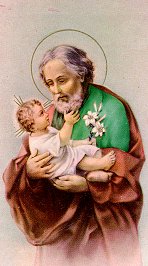
Prayer to St. Joseph over 1900 years old
O St. Joseph whose protection is so great, so strong, so prompt before the Throne of God, I place in you all my interests and desires. O St. Joseph do assist me by your powerful intercession and obtain for me from your Divine Son all spiritual blessings through Jesus Christ, Our Lord; so that having engaged here below your Heavenly power I may offer my Thanksgiving and Homage to the most Loving of Fathers. O St. Joseph, I never weary contemplating you and Jesus asleep in your arms. I dare not approach while He reposes near your heart. Press him in my name and kiss His fine Head for me, and ask Him to return the Kiss when I draw my dying breath. St. Joseph, Patron of departing souls, pray for us.
Amen.
Say for nine consecutive mornings for anything you may desire. It has seldom been known to fail.
Sunday, April 30, 2006
Breakfast at McDonald's
An important lesson which we all have to learn in our lifetime:
Breakfast at McDonald's
Please read until the end.This is a good story and is true, please read it all the way through until the end! (After the story, there are some very interesting facts!):I am a mother of three (ages 14, 12, 3) and have recently completed my college degree.
The last class I had to take was Sociology.The teacher was absolutely inspiring with the qualities that I wish every human being had been graced with.Her last project of the term was called "Smile."The class was asked to go out and smile at three people and document their reactions.
I am a very friendly person and always smile at everyone and say hello anyway, so, I thought this would be a piece of cake, literally.Soon after we were assigned the project, my husband, youngest son, and I went out to McDonald's one crisp March morning.It was just our way of sharing special playtime with our son.We were standing in line, waiting to be served, when all of a sudden everyone around us began to back away, and then even my husband did.I did not move an inch... an overwhelming feeling of panic welled up inside of me as I turned to see why they had moved.As I turned around I smelled a horrible "dirty body" smell, and there standing behind me were two poor homeless men.
As I looked down at the short gentleman, close to me, he was "smiling".His beautiful sky blue eyes were full of God's Light as he searched for acceptance.He said, "Good day" as he counted the few coins he had been clutching.The second man fumbled with his hands as he stood behind his friend. I realized the second man was mentally challenged and the blue-eyed gentleman was his salvation.
I held my tears as I stood there with them.The young lady at the counter asked him what they wanted.He said, "Coffee is all Miss" because that was all they could afford. (If they wanted to sit in the restaurant and warm up, they had to buy something. He just wanted to be warm).Then I really felt it - the compulsion was so great I almost reached out and embraced the little man with the blue eyes.That is when I noticed all eyes in the restaurant were set on me, judging my every action.I smiled and asked the young lady behind the counter to give me two more breakfast meals on a separate tray.I then walked around the corner to the table that the men had chosen as a resting spot. I put the tray on the table and laid my hand on the blue-eyed gentleman's cold hand.He looked up at me, with tears in his eyes, and said, "Thank you."I leaned over, began to pat his hand and said, "I did not do this for you. God is here working through me to give you hope."
I started to cry as I walked away to join my husband and son. When I sat down my husband smiled at me and said, "That is why God gave you to me, Honey, to give me hope."We held hands for a moment and at that time, we knew that only because of the Grace that we had been given were we able to give.We are not church goers, but we are believers.That day showed me the pure Light of God's sweet love.I returned to college, on the last evening of class, with this story in hand.I turned in "my project" and the instructor read it.Then she looked up at me and said, "Can I share this?"I slowly nodded as she got the attention of the class.She began to read and that is when I knew that we as human beings and being part of God share this need to heal people and to be healed.
In my own way I had touched the people at McDonald's, my husband, son, instructor, and every soul that shared the classroom on the last night I spent as a college student.I graduated with one of the biggest lessons I would ever learn: UNCONDITIONAL ACCEPTANCE.
Much love and compassion is sent to each and every person who may read this and learn how toLOVE PEOPLE AND USE THINGS - NOT LOVE THINGS AND USE PEOPLE.
If you think this story has touched you in any way, please send this to everyone you know.There is an Angel sent to watch over you.In order for her to work, you must pass this on to the people you want watched over.
An Angel wrote:Many people will walk in and out of your life, but only true friends will leave footprints in your heart.To handle yourself, use your head.To handle others, use your heart.God Gives every bird it's food, but He does not throw it into its nest.
Amen.
Paul
Breakfast at McDonald's
Please read until the end.This is a good story and is true, please read it all the way through until the end! (After the story, there are some very interesting facts!):I am a mother of three (ages 14, 12, 3) and have recently completed my college degree.
The last class I had to take was Sociology.The teacher was absolutely inspiring with the qualities that I wish every human being had been graced with.Her last project of the term was called "Smile."The class was asked to go out and smile at three people and document their reactions.
I am a very friendly person and always smile at everyone and say hello anyway, so, I thought this would be a piece of cake, literally.Soon after we were assigned the project, my husband, youngest son, and I went out to McDonald's one crisp March morning.It was just our way of sharing special playtime with our son.We were standing in line, waiting to be served, when all of a sudden everyone around us began to back away, and then even my husband did.I did not move an inch... an overwhelming feeling of panic welled up inside of me as I turned to see why they had moved.As I turned around I smelled a horrible "dirty body" smell, and there standing behind me were two poor homeless men.
As I looked down at the short gentleman, close to me, he was "smiling".His beautiful sky blue eyes were full of God's Light as he searched for acceptance.He said, "Good day" as he counted the few coins he had been clutching.The second man fumbled with his hands as he stood behind his friend. I realized the second man was mentally challenged and the blue-eyed gentleman was his salvation.
I held my tears as I stood there with them.The young lady at the counter asked him what they wanted.He said, "Coffee is all Miss" because that was all they could afford. (If they wanted to sit in the restaurant and warm up, they had to buy something. He just wanted to be warm).Then I really felt it - the compulsion was so great I almost reached out and embraced the little man with the blue eyes.That is when I noticed all eyes in the restaurant were set on me, judging my every action.I smiled and asked the young lady behind the counter to give me two more breakfast meals on a separate tray.I then walked around the corner to the table that the men had chosen as a resting spot. I put the tray on the table and laid my hand on the blue-eyed gentleman's cold hand.He looked up at me, with tears in his eyes, and said, "Thank you."I leaned over, began to pat his hand and said, "I did not do this for you. God is here working through me to give you hope."
I started to cry as I walked away to join my husband and son. When I sat down my husband smiled at me and said, "That is why God gave you to me, Honey, to give me hope."We held hands for a moment and at that time, we knew that only because of the Grace that we had been given were we able to give.We are not church goers, but we are believers.That day showed me the pure Light of God's sweet love.I returned to college, on the last evening of class, with this story in hand.I turned in "my project" and the instructor read it.Then she looked up at me and said, "Can I share this?"I slowly nodded as she got the attention of the class.She began to read and that is when I knew that we as human beings and being part of God share this need to heal people and to be healed.
In my own way I had touched the people at McDonald's, my husband, son, instructor, and every soul that shared the classroom on the last night I spent as a college student.I graduated with one of the biggest lessons I would ever learn: UNCONDITIONAL ACCEPTANCE.
Much love and compassion is sent to each and every person who may read this and learn how toLOVE PEOPLE AND USE THINGS - NOT LOVE THINGS AND USE PEOPLE.
If you think this story has touched you in any way, please send this to everyone you know.There is an Angel sent to watch over you.In order for her to work, you must pass this on to the people you want watched over.
An Angel wrote:Many people will walk in and out of your life, but only true friends will leave footprints in your heart.To handle yourself, use your head.To handle others, use your heart.God Gives every bird it's food, but He does not throw it into its nest.
Amen.
Paul
Saturday, April 29, 2006
Pius XII Closing In On Sainthood
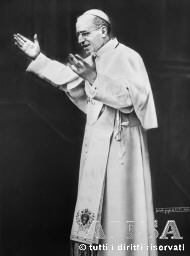
My father met Pope Pius XII in April of 1958, just six months before he died. And this meeting had a profound impact upon him. It is tragic that so many have slandered Pius XII in their hate-filled attacks on the Mystical Body of Christ. But then, any true disciple of Christ will often encounter such attacks. The enemies of Christ and His Church cannot fight a battle on solid ground. Therefore they rely on gossip and slander which may be done in secret. And in the darkness.
Paul
Friday, April 28, 2006
Anyone who would like a copy of attorney Daniel Shea's hateful emails regarding the Catholic Church may obtain one by writing me at: cleghornboy@juno.com
Paul M.
Thursday, April 27, 2006
Anti-Catholic for District Attorney?
Attorney Daniel J. Shea, who has referred to the Catholic Church as "a criminal institution," announces bid for District Attorney position:
Attorney Daniel J. Shea, an attorney who represented clergy abuse victims within the Diocese of Worcester, Massachusetts and who has referred to the Catholic Church as "a criminal institution," while asserting that "Ratzinger and Co" have engaged in an "international conspiracy to obstruct justice," has announced that he will seek the Democratic nomination to the position of District Attorney for the Middle District, which encompasses Worcester County/Central Massachusetts.
On one occasion, attorney Shea wrote me an email in which he said that the Church, "..is a criminal institution and those who contribute to it any longer are aiding and abetting this criminal conduct called obstruction of justice." On another occasion, he asserted that I "..seem to be blinded by the ability of Ratzinger and Co. to engage in an international conspiracy to obstruct justice."
Please take the time to read my two articles on attorney Daniel J. Shea, the links to which are below. Note how attorney Shea has been involved with the transgender movement. Attorney Shea's anti-Catholic remarks are a cause for serious concern. Do we really want to see this man elected to the District Attorney's Office of the Middle District? How will Catholics fare under Daniel Shea as a District Attorney? Will Catholics be able to receive justice from a man who has said that Catholics who contribute to the Catholic Church are 'aiding and abetting" a "criminal institution"?
What do you think?
The articles:
http://lasalettejourney.blogspot.com/2005/06/attorney-daniel-shea-and-co-liberal.html
http://lasalettejourney.blogspot.com/2005/06/attorney-daniel-shea-and-co-liberal_23.html
God love you,
Paul
attorney daniel shea
Sunday, April 23, 2006

Saturday, April 22, 2006
A Prayer for Parish Priests on Divine Mercy Sunday
A Prayer for Parish Priests on Divine Mercy Sunday
Lord Jesus,
You have entrusted to me the care of my brothers and sisters gathered together in this parish family. My mission in life is to get to Heaven and bring my brothers and sisters with me. But, you know how sinful and weak I am. Nevertheless, I know that I can do all things in you. Grant me any suffering in this life so that I may offer that suffering up for the conversion of all of my brothers and sisters who refuse to approach the sacrament of mercy. Do not let anyone who has been entrusted to my pastoral care be lost because of my negligence or my lack of holiness. Never let me be departed from you. Jesus, I trust in you! Amen.
Lord Jesus,
You have entrusted to me the care of my brothers and sisters gathered together in this parish family. My mission in life is to get to Heaven and bring my brothers and sisters with me. But, you know how sinful and weak I am. Nevertheless, I know that I can do all things in you. Grant me any suffering in this life so that I may offer that suffering up for the conversion of all of my brothers and sisters who refuse to approach the sacrament of mercy. Do not let anyone who has been entrusted to my pastoral care be lost because of my negligence or my lack of holiness. Never let me be departed from you. Jesus, I trust in you! Amen.
Thursday, April 20, 2006
Psychiatry & Faith
Psychiatry & Faith
The Struggle for Chastity and Purity
by Bruce W. Walters, M.D.
Read this important article here:
http://www.latinmassmagazine.com/articles_2001_FA_Walters.html
The Struggle for Chastity and Purity
by Bruce W. Walters, M.D.
Read this important article here:
http://www.latinmassmagazine.com/articles_2001_FA_Walters.html
More Education in Immodesty
Last year, this Blog exposed the fact that Transfiguration Parish in Manchester, New Hampshire had inappropriate website links for teens at its website. After the Diocese of Manchester was notified, these links were removed. Some of these website links may now be found at the website for NH Catholic Youth: http://www.nhcatholicyouth.net/
Among these website links:
http://www.nomoho.org A website whose name is a clear reference to the words "No more whore" and which discusses matters of sexuality. Although this website is temporarily down, a little message from an individual named Matt Smith reads, "NOMOHO.com will be back up soon. I have a lot of coding to do. When the site is back up, you'll be able to purchase the most durable chastity belts on the planet."
I'll bet. I wonder if Mr. Smith plans on offering condoms and abortifacient drugs as well?
http://www.pamstenzel.com A website which has a banner reading "No screwin around," and an introduction which states that, "Pam Stenzel travels the world talking to teens and their parents about sex. Scott Gardner works every day with teen girls who are suffering the consequences of poor choices. Kyle and Abby have been married for a couple of years. Eric is getting ready for college. Jasmine is waiting for the right guy. Cassandra is getting over a bad relationship. Alisha is trying to make good choices in her life. She made bad ones in the past. Nate likes to skate.
They talk about their experiences, they talk about character, they talk about STD’s, pregnancy, boundaries, friends, respect, body parts, good relationships and bad ones, boys and girls. It’s all real, it’s all true. Sex is a big deal, it is a topic we all deal with at some point, and we are all a result of the act… whether we like it or not."
In other words, immodesty must reign since "we are all a result" of the sex act. So, let's talk about body parts and hold what should remain a sacred sphere to be treated with modesty under a laboratory microscope.
http://www.xxxchurch.com/ This one speaks for itself.
The Diocese of Manchester did the right thing when it had Transfiguration Parish remove these morally offensive and inappropriate website links from its website. One has to wonder why these links remain at the website for New Hampshire Catholic Youth.
Read the following:
The Sacred Congregation for Catholic Education, in an Instruction entitled "Educational Guidance in Human Love - Outlines for sex education," had this to say about the importance and role of modesty in sex education:
EDUCATION FOR MODESTY AND FRIENDSHIP
90. Modesty, a fundamental component of the personality, may be considered - on the ethical level - as the vigilant knowledge which defends the dignity of man, woman and authentic love. It tends to react to certain attitudes and to curb behaviour which stains the dignity of the person. It is a necessary and effective means of controlling the instincts, making authentic love flower, integrating the affective-sexual life in the harmonions picture of the person. Modesty has great pedagogic weight and must therefore be respected. Children and young people will thus learn to respect the body itself as a gift from God, member of Christ and temple of the Holy Spirit; they will learn to resist the evil which surrounds them and to have a vision and clear imagination to seek to express a truly human love with all its spiritual components when they meet people in friendship.
91. To such an end, concrete and attractive models of virtue are to be presented, the aesthetic sense be developed, inspiring a taste for the beauty present in nature, in art and in moral life; the young are to be educated to assimilate a system of sensible and spiritual values in an unselfish impetus of faith and love.
92. Friendship is the height of affective maturation and differs from mere cameraderie by its interior dimension, by communication which allows and fosters true communion, by its reciprocal generosity and its stability. Education for friendship can become a factor of extraordinary importance in the making of the personality in its individual and social dimensions.
93. The bonds of friendship which unite the young of both sexes contribute both to understanding and to reciprocal respect when they are maintained within the limits of normal affective expression. If however they become or tend to become manifestations of a genital character, they lose the authentic meaning of mature friendship, prejudice the relationships involved and the future prospects with regard to an eventual marriage, and render the individuals concerned less attentive to a possible call to the consecrated life.
This teaching on modesty is echoed in the Catechism of the Catholic Church. For example, No. 2521 says that: "Purity requires modesty, an integral part of temperance. Modesty protects the intimate center of the person. It means refusing to unveil what should remain hidden. It is ordered to chastity to whose sensitivity it bears witness. It guides how one looks at others and behaves toward them in conformity with the dignity of persons and their solidarity."
And No. 2522 says that: "Modesty protects the mysteryof persons and their love. It encourages patience and moderation in loving relationships...Modesty is decency. It inspires one's choice of clothing. It keeps silence or reserve where there is evident risk of unhealthy curiosity. It is discreet."
Bearing this Magisterial teaching in mind, can we honestly suggest that the website for New Hampshire Catholic Youth is respecting modesty of persons when it features links to websites such as the ones mentioned above?
I submit that the Diocese of Manchester is not yet fully committed toward promoting an authentic sex education for its youth. One which recognizes the importance and role of modesty.
Paul Anthony Melanson
Among these website links:
http://www.nomoho.org A website whose name is a clear reference to the words "No more whore" and which discusses matters of sexuality. Although this website is temporarily down, a little message from an individual named Matt Smith reads, "NOMOHO.com will be back up soon. I have a lot of coding to do. When the site is back up, you'll be able to purchase the most durable chastity belts on the planet."
I'll bet. I wonder if Mr. Smith plans on offering condoms and abortifacient drugs as well?
http://www.pamstenzel.com A website which has a banner reading "No screwin around," and an introduction which states that, "Pam Stenzel travels the world talking to teens and their parents about sex. Scott Gardner works every day with teen girls who are suffering the consequences of poor choices. Kyle and Abby have been married for a couple of years. Eric is getting ready for college. Jasmine is waiting for the right guy. Cassandra is getting over a bad relationship. Alisha is trying to make good choices in her life. She made bad ones in the past. Nate likes to skate.
They talk about their experiences, they talk about character, they talk about STD’s, pregnancy, boundaries, friends, respect, body parts, good relationships and bad ones, boys and girls. It’s all real, it’s all true. Sex is a big deal, it is a topic we all deal with at some point, and we are all a result of the act… whether we like it or not."
In other words, immodesty must reign since "we are all a result" of the sex act. So, let's talk about body parts and hold what should remain a sacred sphere to be treated with modesty under a laboratory microscope.
http://www.xxxchurch.com/ This one speaks for itself.
The Diocese of Manchester did the right thing when it had Transfiguration Parish remove these morally offensive and inappropriate website links from its website. One has to wonder why these links remain at the website for New Hampshire Catholic Youth.
Read the following:
The Sacred Congregation for Catholic Education, in an Instruction entitled "Educational Guidance in Human Love - Outlines for sex education," had this to say about the importance and role of modesty in sex education:
EDUCATION FOR MODESTY AND FRIENDSHIP
90. Modesty, a fundamental component of the personality, may be considered - on the ethical level - as the vigilant knowledge which defends the dignity of man, woman and authentic love. It tends to react to certain attitudes and to curb behaviour which stains the dignity of the person. It is a necessary and effective means of controlling the instincts, making authentic love flower, integrating the affective-sexual life in the harmonions picture of the person. Modesty has great pedagogic weight and must therefore be respected. Children and young people will thus learn to respect the body itself as a gift from God, member of Christ and temple of the Holy Spirit; they will learn to resist the evil which surrounds them and to have a vision and clear imagination to seek to express a truly human love with all its spiritual components when they meet people in friendship.
91. To such an end, concrete and attractive models of virtue are to be presented, the aesthetic sense be developed, inspiring a taste for the beauty present in nature, in art and in moral life; the young are to be educated to assimilate a system of sensible and spiritual values in an unselfish impetus of faith and love.
92. Friendship is the height of affective maturation and differs from mere cameraderie by its interior dimension, by communication which allows and fosters true communion, by its reciprocal generosity and its stability. Education for friendship can become a factor of extraordinary importance in the making of the personality in its individual and social dimensions.
93. The bonds of friendship which unite the young of both sexes contribute both to understanding and to reciprocal respect when they are maintained within the limits of normal affective expression. If however they become or tend to become manifestations of a genital character, they lose the authentic meaning of mature friendship, prejudice the relationships involved and the future prospects with regard to an eventual marriage, and render the individuals concerned less attentive to a possible call to the consecrated life.
This teaching on modesty is echoed in the Catechism of the Catholic Church. For example, No. 2521 says that: "Purity requires modesty, an integral part of temperance. Modesty protects the intimate center of the person. It means refusing to unveil what should remain hidden. It is ordered to chastity to whose sensitivity it bears witness. It guides how one looks at others and behaves toward them in conformity with the dignity of persons and their solidarity."
And No. 2522 says that: "Modesty protects the mysteryof persons and their love. It encourages patience and moderation in loving relationships...Modesty is decency. It inspires one's choice of clothing. It keeps silence or reserve where there is evident risk of unhealthy curiosity. It is discreet."
Bearing this Magisterial teaching in mind, can we honestly suggest that the website for New Hampshire Catholic Youth is respecting modesty of persons when it features links to websites such as the ones mentioned above?
I submit that the Diocese of Manchester is not yet fully committed toward promoting an authentic sex education for its youth. One which recognizes the importance and role of modesty.
Paul Anthony Melanson
From the La Salette Journey Archives
Interficere errorem, diligere errantem
This basic principle, taught by St. Augustine in his classic work entitled "The City of God" (Book 14, ch.6), translates thusly into English: "kill the error, love the one who errs." Unfortunately, there are many Catholics today who believe that one cannot accomplish both of these actions at the same time. Such people fail to understand that love actually requires the killing of error.
Why do these individuals remain silent when faced with the grave evils of our day? And why are they critical of those Catholics who actually do condemn these evils? The answer is simple, they wrongly interpret Sacred Scripture as teaching that it is never permissible to judge. Yes, our Lord tells us, "Judge not, that you may not be judged. For with what judgment you judge, you shall be judged: and with what measure you mete, it shall be measured to you again" (Matthew 7: 1-2).
And we also read in James 4: 12-13, "There is one lawgiver and judge, that is able to destroy and to deliver. But who art thou that judgest thy neighbour?"
Vatican II, specifically Gaudium et Spes, No. 28, also reminds us of this prohibition against judging others: "God alone is the judge and searcher of hearts; for that reason he forbids us to make judgments about the internal guilt of anyone." But this norm does not preclude us from rendering judgments on words, ideas and actions. On the contrary, the words of the great St. Augustine (Bishop of Hippo and Father and Doctor of the Church) "kill the error, love the one who errs," says it all.
We have a responsibility as Catholics to admonish others at times. And this responsibility is grounded in love of neighbor. When we truly love our neighbor, we will for them to abide in God's love and not to be separated from His love by sin. Recall the Church's definition of charity as expressed in the Catechism of the Catholic Church, No. 1822. The responsibility we have as Catholics to admonish others at times and to engage in fraternal correction is clearly taught in Sacred Scripture: Luke 17:3, 1 Corinthians 6: 1-6, Galatians 6:1, 1 Thessalonians 5: 14, 2 Thessalonians 3: 14-15, James 5: 19-20.
There are two different meanings to the word "judge" in Sacred Scripture then. God alone may judge a person's interior dispositions. God alone may judge a person's soul. Scripture is clear on this. However, the same Scripture is clear when it teaches us that we may judge actions, words and ideas which fail to live up to Gospel demands. Recall what the Holy Spirit tells us through St. Paul in 1 Corinthians 5: 12, "..Do not you judge them that are within?"
It is possible to judge that what others are doing (or saying) is wrong and to accomplish this without judging the person's internal guilt. While killing the error, we continue to love the one who errs. And our love is shown by the very fact that we admonish the person because we don't want them to be separated from God's love by sin.
Until next time,
God love you
Paul Anthony Melanson
This basic principle, taught by St. Augustine in his classic work entitled "The City of God" (Book 14, ch.6), translates thusly into English: "kill the error, love the one who errs." Unfortunately, there are many Catholics today who believe that one cannot accomplish both of these actions at the same time. Such people fail to understand that love actually requires the killing of error.
Why do these individuals remain silent when faced with the grave evils of our day? And why are they critical of those Catholics who actually do condemn these evils? The answer is simple, they wrongly interpret Sacred Scripture as teaching that it is never permissible to judge. Yes, our Lord tells us, "Judge not, that you may not be judged. For with what judgment you judge, you shall be judged: and with what measure you mete, it shall be measured to you again" (Matthew 7: 1-2).
And we also read in James 4: 12-13, "There is one lawgiver and judge, that is able to destroy and to deliver. But who art thou that judgest thy neighbour?"
Vatican II, specifically Gaudium et Spes, No. 28, also reminds us of this prohibition against judging others: "God alone is the judge and searcher of hearts; for that reason he forbids us to make judgments about the internal guilt of anyone." But this norm does not preclude us from rendering judgments on words, ideas and actions. On the contrary, the words of the great St. Augustine (Bishop of Hippo and Father and Doctor of the Church) "kill the error, love the one who errs," says it all.
We have a responsibility as Catholics to admonish others at times. And this responsibility is grounded in love of neighbor. When we truly love our neighbor, we will for them to abide in God's love and not to be separated from His love by sin. Recall the Church's definition of charity as expressed in the Catechism of the Catholic Church, No. 1822. The responsibility we have as Catholics to admonish others at times and to engage in fraternal correction is clearly taught in Sacred Scripture: Luke 17:3, 1 Corinthians 6: 1-6, Galatians 6:1, 1 Thessalonians 5: 14, 2 Thessalonians 3: 14-15, James 5: 19-20.
There are two different meanings to the word "judge" in Sacred Scripture then. God alone may judge a person's interior dispositions. God alone may judge a person's soul. Scripture is clear on this. However, the same Scripture is clear when it teaches us that we may judge actions, words and ideas which fail to live up to Gospel demands. Recall what the Holy Spirit tells us through St. Paul in 1 Corinthians 5: 12, "..Do not you judge them that are within?"
It is possible to judge that what others are doing (or saying) is wrong and to accomplish this without judging the person's internal guilt. While killing the error, we continue to love the one who errs. And our love is shown by the very fact that we admonish the person because we don't want them to be separated from God's love by sin.
Until next time,
God love you
Paul Anthony Melanson
I shall extol Thee
"I shall extol Thee, O God my king: and I shall bless Thy name for ever; yea, for ever and ever.
"Exaltabo Te, Deus meus rex; et benedicam nomini Tuo in saeculum, et in saeculum saeculi.
2 Every day shall I bless Thee: and I will praise Thy name for ever; yea, for ever and ever.
per singulos dies benedicam Tibi, et laudabo nomen Tuum in saeculum, et in saeculum saeculi.
3 Great is the Lord, and greatly to be praised: and of His greatness there is no end." (Ps. 144, 1-3)
Magnus Dominus, et laudabilis nimis; et magnitudinis Ejus non est finis." (Ps. 144, 1-3)
"Exaltabo Te, Deus meus rex; et benedicam nomini Tuo in saeculum, et in saeculum saeculi.
2 Every day shall I bless Thee: and I will praise Thy name for ever; yea, for ever and ever.
per singulos dies benedicam Tibi, et laudabo nomen Tuum in saeculum, et in saeculum saeculi.
3 Great is the Lord, and greatly to be praised: and of His greatness there is no end." (Ps. 144, 1-3)
Magnus Dominus, et laudabilis nimis; et magnitudinis Ejus non est finis." (Ps. 144, 1-3)
Wednesday, April 12, 2006
This Word Was Hid From Them
"Behold, we go up to Jerusalem; and all things shall be accomplished which were written by the prophets concerning the Son of man.
"Ecce ascendimus Jerosolymam, et consummabuntur omnia quae scripta sunt per prophetas de Filio hominis.
32 For He shall be delivered to the Gentiles and shall be mocked and scourged and spit upon.
Tradetur enim gentibus, et illudetur, et flagellabitur, et conspuetur;
33 And after they have scourged Him, they will put Him to death. And the third day He shall rise again.
et postquam flagellaverint, occident Eum, et tertia die resurget.
34 And they understood none of these things, and this word was hid from them: and they understood not the things that were said." (Lk. 18, 31-34)
Et ipsi nihil horum intellexerunt, et erat verbum istud absconditum ab eis, et non intelligebant quae dicebantur." (Lc. 18, 31-34)
"Ecce ascendimus Jerosolymam, et consummabuntur omnia quae scripta sunt per prophetas de Filio hominis.
32 For He shall be delivered to the Gentiles and shall be mocked and scourged and spit upon.
Tradetur enim gentibus, et illudetur, et flagellabitur, et conspuetur;
33 And after they have scourged Him, they will put Him to death. And the third day He shall rise again.
et postquam flagellaverint, occident Eum, et tertia die resurget.
34 And they understood none of these things, and this word was hid from them: and they understood not the things that were said." (Lk. 18, 31-34)
Et ipsi nihil horum intellexerunt, et erat verbum istud absconditum ab eis, et non intelligebant quae dicebantur." (Lc. 18, 31-34)
Tuesday, April 11, 2006
Friday, April 07, 2006
For military history buffs
I have just published a new 12-month calendar entitled "Camille Melanson's Memories of Korea." While Korea is known as "The forgotten war," the sacrifices of the brave men and women who served there will never be forgotten.
Order your copy today by visiting this link: http://www.lulu.com/content/260503
Thank you,
Paul
Order your copy today by visiting this link: http://www.lulu.com/content/260503
Thank you,
Paul
Thursday, April 06, 2006
Magisterial fidelity?
Over at "Magisterial Fidelity," here is what's being said about His Eminence Sean O'Malley, who was just made a Cardinal by Pope Benedict XVI:
"Well - we're finally at the point where we can get more truth out on what's going down in Sean's schism than we can in the Pilot!O'Malley readies a team of His Own All the schismatics he has in place are looking forward to more of the same."
The Cardinal is in schism? And this woman referred to Mr. John Ansley as a "local lunatic"? There is a real prayer need here.
Paul
Fidélité magistrale ?
Par-dessus à « la Fidélité Magistrale, » est ici ce qu'est dit de Son Eminence Sean O'Malley, qui était juste a fait un Cardinal par le Pape Benoît XVI :« Bien - nous sommes finalement au point où nous pouvons obtenir plus de vérité hors sur ce que descend dans le schisme de Sean que nous pouvons dans le Pilote ! O'Malley prêt une équipe à lui Tout le schismatique il a à sa place regardent en avant à plus de pareil. »Le Cardinal est dans le schisme ? Et cette femme s'est référée à M. John Ansley comme un « le personne déséquilibrée local » ? Il y a un vrai besoin de prière ici.
Paul
"Well - we're finally at the point where we can get more truth out on what's going down in Sean's schism than we can in the Pilot!O'Malley readies a team of His Own All the schismatics he has in place are looking forward to more of the same."
The Cardinal is in schism? And this woman referred to Mr. John Ansley as a "local lunatic"? There is a real prayer need here.
Paul
Fidélité magistrale ?
Par-dessus à « la Fidélité Magistrale, » est ici ce qu'est dit de Son Eminence Sean O'Malley, qui était juste a fait un Cardinal par le Pape Benoît XVI :« Bien - nous sommes finalement au point où nous pouvons obtenir plus de vérité hors sur ce que descend dans le schisme de Sean que nous pouvons dans le Pilote ! O'Malley prêt une équipe à lui Tout le schismatique il a à sa place regardent en avant à plus de pareil. »Le Cardinal est dans le schisme ? Et cette femme s'est référée à M. John Ansley comme un « le personne déséquilibrée local » ? Il y a un vrai besoin de prière ici.
Paul
Tuesday, April 04, 2006
Joseph Cardinal Ratzinger on Cardinal Newman
16 years ago, Pope Benedict XVI had this to say about the great Cardinal Newman:
1990 Presentation: The Theology of Cardinal Newman
Cardinal Joseph Ratzinger
One of the 'great teachers of the Church'
On 15 May 1879, Pope Leo XIII raised John Henry Newman to the dignity of Cardinal and thus recognized his extraordinary merits, not only for the faithful in England, but also for the universal Church.
To commemorate this event, we publish this Presentation in which Joseph Cardinal Ratzinger — now Pope Benedict XVI — revealed his personal approach to Newman, while underscoring the relevance of this great teacher for the Church of our time.
The Presentation was given in the centenary year of Newman's death (1990) during a Symposium organized by the International Centre of Newman Friends, run by members of the Spiritual Family, "The Work".
I do not feel competent to speak on Newman's figure or work, but perhaps it is meaningful if I tell a little about my own way to Newman, in which indeed something is reflected of the presence of this great English theologian in the intellectual and spiritual struggle of our time.
In January 1946, when I began my study of theology in the Seminary in Freising which had finally reopened after the confusion of the war, an older student was assigned as prefect to our group, who had begun to work on a dissertation on Newman's theology of conscience, even before the beginning of the war. In all the years of his military service he had not lost sight of this theme, which he now turned to with new enthusiasm and energy.
We were soon bonded by a personal friendship, wholly centred on the great problems of philosophy and theology. Of course, Newman was always present. Alfred Läpple — the name of the abovementioned prefect — published his dissertation in 1952 with the title: Der Einzelne in der Kirche (The Individual in the Church).
For us at that time, Newman's teaching on conscience became an important foundation for theological personalism, which was drawing us all in its sway. Our image of the human being as well as our image of the Church was permeated by this point of departure.
We had experienced the claim of a totalitarian party, which understood itself as the fulfilment of history and which negated the conscience of the individual. One of its leaders had said: "I have no conscience. My conscience is Adolf Hitler". The appalling devastation of humanity that followed was before our eyes.
So it was liberating and essential for us to know that the "we" of the Church does not rest on a cancellation of conscience, but that, exactly the opposite, it can only develop from conscience.
Precisely because Newman interpreted the existence of the human being from conscience, that is, from the relationship between God and the soul, was it clear that this personalism is not individualism, and that being bound by conscience does not mean being free tomake random choices — the exact opposite is the case.
It was from Newman that we learned to understand the primacy of the Pope. Freedom of conscience, Newman told us, is not identical with the right "to dispense with conscience, to ignore a Lawgiver and Judge, to be independent of unseen obligations".
Thus, conscience in its true sense is the bedrock of Papal authority; its power comes from revelation that completes natural conscience, which is imperfectly enlightened, and "the championship of the Moral Law and of conscience is its raison d'être".
Doctrine on conscience
I certainly need not explicitly mention that this teaching on conscience has become ever more important for me in the continued development of the Church and the world. Ever more I see how it first opens in the context of the biography of the Cardinal, which is only to be understood in connection with the drama of his century and so speaks to us.
Newman had become a convert as a man of conscience; it was his conscience that led him out of the old ties and securities into the world of Catholicism, which was difficult and strange for him. But this way of conscience is everything except a way of self-sufficient subjectivity: it is a way of obedience to objective truth.
The second step in Newman's lifelong journey of conversion was overcoming the subjective evangelical position in favour of an understanding of Christendom based on the objectivity of dogma. In this connection I find a formulation from one of his early sermons to be especially significant today:
"True Christendom is shown... in obedience and not through a state of consciousness. Thus, the whole duty and work of a Christian is made up of these two parts, Faith and Obedience; 'looking unto Jesus' (Heb 2:9)... and acting according to His will.... I conceive that we are in danger, in this day, of insisting on neither of these as we ought; regarding all true and careful consideration of the Object of faith as barren orthodoxy, technical subtlety... and... making the test of our being religious to consist in our having what is called a spiritual state of heart...".
In this context some sentences from The Arians of the Fourth Century, which may sound rather astonishing at first, seem important to me: "...to detect and to approve the principle on which... peace is grounded in Scripture; to submit to the dictation of truth, as such, as a primary authority in matters of political and private conduct; to understand... zeal to be prior in the succession of Christian graces to benevolence".
For me it is always fascinating to see and consider how in just this way and only in this way, through commitment to the truth, to God, conscience receives its rank, dignity and strength.I would like in this context to add but one sentence from the Apologia, which shows the realism in this idea of person and Church: "Living movements do not come of committees".
Recognize identity of faith
Very briefly I would like to return to the autobiographical thread. When I continued my studies in Munich in 1947, I found a well read and enthusiastic follower of Newman in the fundamental theologian, Gottlieb Söhngen, who was my true teacher in theology. He opened up the Grammar of Assent to us and in doing so, the special manner and form of certainty in religious knowledge.
Even deeper for me was the contribution which Heinrich Fries published in connection with the Jubilee of Chalcedon. Here I found access to Newman's teaching on the development of doctrine, which I regard along with his doctrine on conscience as his decisive contribution to the renewal of theology.
With this he had placed the key in our hand to build historical thought into theology, or much more, he taught us to think historically in theology and so to recognize the identity of faith in all developments.
Here I have to refrain from deepening these ideas further. It seems to me that Newman's starting point, also in modern theology, has not yet been fully evaluated. Fruitful possibilities awaiting development are still hidden in it.
At this point I would only like to refer again to the biographical background of this concept.
It is known how Newman's insight into the ideas of development influenced his way to Catholicism. But it is not just a matter of an unfolding of ideas. In the concept of development, Newman's own life plays a role. That seems to become visible to me in his well-known words: "...to live is to change, and to be perfect is to have changed often".Throughout his entire life, Newman was a person converting, a person being transformed, and thus he always remained and became ever more himself.
St Augustine and Newman
Here the figure of St Augustine comes to my mind, with whom Newman was so associated. When Augustine was converted in the garden at Cassiciacum he understood conversion according to the system of the revered master Plotin and the Neo-Platonic philosophers. He thought that his past sinful life would now be definitively cast off; from now on the convert would be someone wholly new and different, and his further journey would be a steady climb to the ever purer heights of closeness to God.
It was something like that which Gregory of Nyssa described in his Ascent of Moses: "Just as bodies, after having received the first push downwards, fall effortlessly into the depths with ever greater speed, so, on the contrary, the soul which has loosed itself from earthly passion rises up in a rapid upward movement... constantly overcoming itself in a steady upward flight".
Augustine's actual experience was a different one. He had to learn that being a Christian is always a difficult journey with all its heights and depths.
The image of ascensus is exchanged for that of iter, whose tiring weight is lightened and borne up by moments of light which we may receive now and then. Conversion is the iter — the roadway of a whole lifetime. And faith is always "development", and precisely in this manner it is the maturation of the soul to truth, to God, who is more intimate to us than we are to ourselves.
In the idea of "development" Newman had written his own experience of a never finished conversion and interpreted for us, not only the way of Christian doctrine, but that of the Christian life.
The characteristic of the great Doctor of the Church, it seems to me, is that he teaches not only through his thought and speech but also by his life, because within him, thought and life are interpenetrated and defined. If this is so, then Newman belongs to the great teachers of the Church, because he both touches our hearts and enlightens our thinking.
Taken from:L'Osservatore RomanoWeekly Edition in English1 June 2005, page 9
L'Osservatore Romano is the newspaper of the Holy See.The Weekly Edition in English is published for the US by:
The Cathedral FoundationL'Osservatore Romano English Edition320 Cathedral St.Baltimore, MD 21201Subscriptions: (410) 547-5315Fax: (410) 332-1069.
1990 Presentation: The Theology of Cardinal Newman
Cardinal Joseph Ratzinger
One of the 'great teachers of the Church'
On 15 May 1879, Pope Leo XIII raised John Henry Newman to the dignity of Cardinal and thus recognized his extraordinary merits, not only for the faithful in England, but also for the universal Church.
To commemorate this event, we publish this Presentation in which Joseph Cardinal Ratzinger — now Pope Benedict XVI — revealed his personal approach to Newman, while underscoring the relevance of this great teacher for the Church of our time.
The Presentation was given in the centenary year of Newman's death (1990) during a Symposium organized by the International Centre of Newman Friends, run by members of the Spiritual Family, "The Work".
I do not feel competent to speak on Newman's figure or work, but perhaps it is meaningful if I tell a little about my own way to Newman, in which indeed something is reflected of the presence of this great English theologian in the intellectual and spiritual struggle of our time.
In January 1946, when I began my study of theology in the Seminary in Freising which had finally reopened after the confusion of the war, an older student was assigned as prefect to our group, who had begun to work on a dissertation on Newman's theology of conscience, even before the beginning of the war. In all the years of his military service he had not lost sight of this theme, which he now turned to with new enthusiasm and energy.
We were soon bonded by a personal friendship, wholly centred on the great problems of philosophy and theology. Of course, Newman was always present. Alfred Läpple — the name of the abovementioned prefect — published his dissertation in 1952 with the title: Der Einzelne in der Kirche (The Individual in the Church).
For us at that time, Newman's teaching on conscience became an important foundation for theological personalism, which was drawing us all in its sway. Our image of the human being as well as our image of the Church was permeated by this point of departure.
We had experienced the claim of a totalitarian party, which understood itself as the fulfilment of history and which negated the conscience of the individual. One of its leaders had said: "I have no conscience. My conscience is Adolf Hitler". The appalling devastation of humanity that followed was before our eyes.
So it was liberating and essential for us to know that the "we" of the Church does not rest on a cancellation of conscience, but that, exactly the opposite, it can only develop from conscience.
Precisely because Newman interpreted the existence of the human being from conscience, that is, from the relationship between God and the soul, was it clear that this personalism is not individualism, and that being bound by conscience does not mean being free tomake random choices — the exact opposite is the case.
It was from Newman that we learned to understand the primacy of the Pope. Freedom of conscience, Newman told us, is not identical with the right "to dispense with conscience, to ignore a Lawgiver and Judge, to be independent of unseen obligations".
Thus, conscience in its true sense is the bedrock of Papal authority; its power comes from revelation that completes natural conscience, which is imperfectly enlightened, and "the championship of the Moral Law and of conscience is its raison d'être".
Doctrine on conscience
I certainly need not explicitly mention that this teaching on conscience has become ever more important for me in the continued development of the Church and the world. Ever more I see how it first opens in the context of the biography of the Cardinal, which is only to be understood in connection with the drama of his century and so speaks to us.
Newman had become a convert as a man of conscience; it was his conscience that led him out of the old ties and securities into the world of Catholicism, which was difficult and strange for him. But this way of conscience is everything except a way of self-sufficient subjectivity: it is a way of obedience to objective truth.
The second step in Newman's lifelong journey of conversion was overcoming the subjective evangelical position in favour of an understanding of Christendom based on the objectivity of dogma. In this connection I find a formulation from one of his early sermons to be especially significant today:
"True Christendom is shown... in obedience and not through a state of consciousness. Thus, the whole duty and work of a Christian is made up of these two parts, Faith and Obedience; 'looking unto Jesus' (Heb 2:9)... and acting according to His will.... I conceive that we are in danger, in this day, of insisting on neither of these as we ought; regarding all true and careful consideration of the Object of faith as barren orthodoxy, technical subtlety... and... making the test of our being religious to consist in our having what is called a spiritual state of heart...".
In this context some sentences from The Arians of the Fourth Century, which may sound rather astonishing at first, seem important to me: "...to detect and to approve the principle on which... peace is grounded in Scripture; to submit to the dictation of truth, as such, as a primary authority in matters of political and private conduct; to understand... zeal to be prior in the succession of Christian graces to benevolence".
For me it is always fascinating to see and consider how in just this way and only in this way, through commitment to the truth, to God, conscience receives its rank, dignity and strength.I would like in this context to add but one sentence from the Apologia, which shows the realism in this idea of person and Church: "Living movements do not come of committees".
Recognize identity of faith
Very briefly I would like to return to the autobiographical thread. When I continued my studies in Munich in 1947, I found a well read and enthusiastic follower of Newman in the fundamental theologian, Gottlieb Söhngen, who was my true teacher in theology. He opened up the Grammar of Assent to us and in doing so, the special manner and form of certainty in religious knowledge.
Even deeper for me was the contribution which Heinrich Fries published in connection with the Jubilee of Chalcedon. Here I found access to Newman's teaching on the development of doctrine, which I regard along with his doctrine on conscience as his decisive contribution to the renewal of theology.
With this he had placed the key in our hand to build historical thought into theology, or much more, he taught us to think historically in theology and so to recognize the identity of faith in all developments.
Here I have to refrain from deepening these ideas further. It seems to me that Newman's starting point, also in modern theology, has not yet been fully evaluated. Fruitful possibilities awaiting development are still hidden in it.
At this point I would only like to refer again to the biographical background of this concept.
It is known how Newman's insight into the ideas of development influenced his way to Catholicism. But it is not just a matter of an unfolding of ideas. In the concept of development, Newman's own life plays a role. That seems to become visible to me in his well-known words: "...to live is to change, and to be perfect is to have changed often".Throughout his entire life, Newman was a person converting, a person being transformed, and thus he always remained and became ever more himself.
St Augustine and Newman
Here the figure of St Augustine comes to my mind, with whom Newman was so associated. When Augustine was converted in the garden at Cassiciacum he understood conversion according to the system of the revered master Plotin and the Neo-Platonic philosophers. He thought that his past sinful life would now be definitively cast off; from now on the convert would be someone wholly new and different, and his further journey would be a steady climb to the ever purer heights of closeness to God.
It was something like that which Gregory of Nyssa described in his Ascent of Moses: "Just as bodies, after having received the first push downwards, fall effortlessly into the depths with ever greater speed, so, on the contrary, the soul which has loosed itself from earthly passion rises up in a rapid upward movement... constantly overcoming itself in a steady upward flight".
Augustine's actual experience was a different one. He had to learn that being a Christian is always a difficult journey with all its heights and depths.
The image of ascensus is exchanged for that of iter, whose tiring weight is lightened and borne up by moments of light which we may receive now and then. Conversion is the iter — the roadway of a whole lifetime. And faith is always "development", and precisely in this manner it is the maturation of the soul to truth, to God, who is more intimate to us than we are to ourselves.
In the idea of "development" Newman had written his own experience of a never finished conversion and interpreted for us, not only the way of Christian doctrine, but that of the Christian life.
The characteristic of the great Doctor of the Church, it seems to me, is that he teaches not only through his thought and speech but also by his life, because within him, thought and life are interpenetrated and defined. If this is so, then Newman belongs to the great teachers of the Church, because he both touches our hearts and enlightens our thinking.
Taken from:L'Osservatore RomanoWeekly Edition in English1 June 2005, page 9
L'Osservatore Romano is the newspaper of the Holy See.The Weekly Edition in English is published for the US by:
The Cathedral FoundationL'Osservatore Romano English Edition320 Cathedral St.Baltimore, MD 21201Subscriptions: (410) 547-5315Fax: (410) 332-1069.
Subscribe to:
Posts (Atom)